
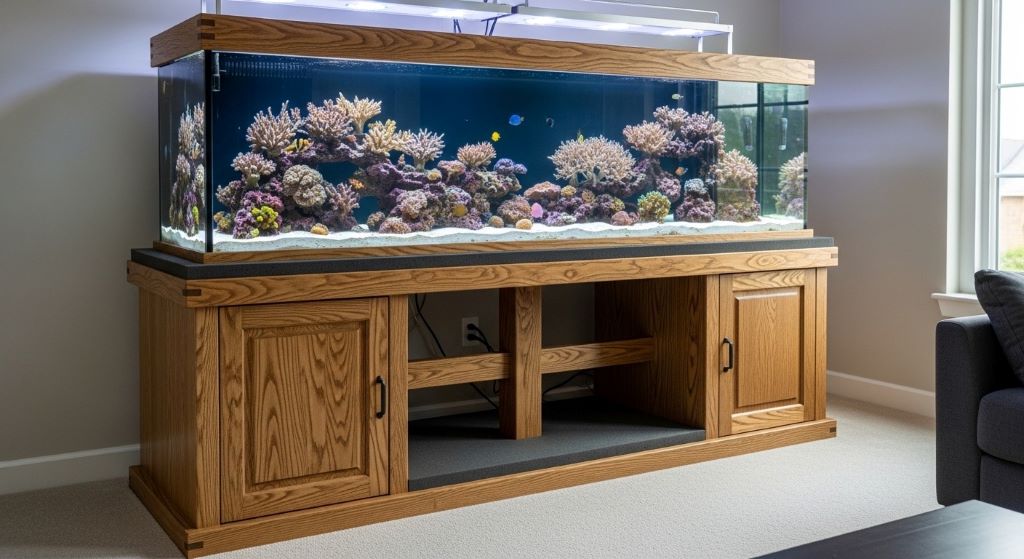
Setting up an aquarium is an exciting venture that brings life and beauty into your home. However, before you fill that tank with water, fish, and decorations, you need to ensure your stand can safely support the weight. Many new aquarium owners underestimate just how heavy a filled tank becomes, leading to potential disasters that could damage your home and harm your aquatic pets.
Understanding how to calculate the weight your aquarium will place on its stand is crucial for making informed purchasing decisions. This guide will walk you through everything you need to know about evaluating stand capacity, calculating total tank weight, and ensuring your setup remains safe for years to come.
Understanding the True Weight of Your Aquarium
Most people think of aquariums in terms of their water capacity. A 55-gallon tank sounds manageable until you realize that water alone weighs over 450 pounds. However, water is just the beginning of your weight calculation.
A gallon of water weighs approximately 8.34 pounds. This means a 20-gallon tank holds about 167 pounds of water, while a 75-gallon tank contains roughly 625 pounds. These numbers already exceed what many furniture pieces are designed to support.
Beyond the water itself, you must account for the glass or acrylic tank walls. Larger tanks use thicker glass to withstand water pressure, adding significant weight. A 55-gallon glass tank typically weighs between 60 and 80 pounds empty, while a 125-gallon tank can weigh 200 pounds or more before adding any water.
Substrate is another major weight contributor. Gravel, sand, or specialized aquarium soil adds substantial mass to your setup. A standard two-inch layer of gravel in a 55-gallon tank adds approximately 55 pounds. Heavier substrates like sand can add even more weight.
Decorations, rocks, and driftwood further increase the load. A single large rock can weigh 10 to 20 pounds, and many aquascapes use multiple pieces. Live rock for saltwater tanks is particularly heavy, often adding 50 to 100 pounds or more to reef setups.
Equipment like filters, heaters, and lighting systems contribute smaller amounts individually but add up collectively. While these items might only total 10 to 30 pounds, every ounce matters when you’re approaching weight limits.
Basic Weight Calculation Formula
Calculating your total aquarium weight requires adding several components together. Start with this straightforward formula that covers the essentials.
First, determine your water weight by multiplying gallons by 8.34. For example, a 40-gallon tank holds 333.6 pounds of water. Always use the actual water volume, not the tank’s advertised size, as tanks are never filled to the absolute brim.
Next, add the empty tank weight. Check manufacturer specifications for exact numbers, or use general estimates. Small tanks under 20 gallons typically weigh 10 to 25 pounds empty. Medium tanks from 30 to 55 gallons range from 40 to 80 pounds. Large tanks over 75 gallons can weigh 100 to 250 pounds or more.
Calculate substrate weight based on your chosen material and depth. Gravel weighs roughly 1.5 pounds per gallon of substrate volume. Sand weighs about 2 pounds per gallon. Measure your substrate depth and calculate the volume, then multiply by the appropriate weight.
Add decoration weight by weighing major items before placing them in the tank. Use a bathroom scale for larger rocks and driftwood pieces. Estimate smaller items collectively, being generous in your calculations to maintain a safety margin.
Include equipment weight, though this is typically minor. A canister filter might weigh 15 pounds when full, while hang-on-back filters add perhaps 5 pounds. Don’t forget about water in external filters when calculating.
Finally, add 10 to 20 percent to your total as a safety buffer. This accounts for items you might add later, water absorbed by decorations, and general uncertainty in your estimates. It’s always better to overestimate than underestimate when safety is concerned.
How Stand Construction Affects Tank Stand Strength
The way a stand is built dramatically impacts its load-bearing capacity. Understanding different construction methods helps you evaluate whether a stand can safely support your aquarium.
Wood frame stands with solid construction are the most common and reliable option for home aquariums. These stands use vertical posts at each corner with horizontal supports connecting them. The key is having the weight distributed across these vertical posts, which transfer the load directly to the floor.
Metal stands offer excellent strength-to-weight ratios. Steel or aluminum frames can support tremendous weight while remaining relatively lightweight themselves. However, the quality of welding and the gauge of metal used vary significantly between manufacturers. Cheap metal stands may use thin tubing that flexes under load.
Particle board and MDF stands are common in budget options. While these materials can support aquariums when properly reinforced, they have critical weaknesses. They absorb water readily, losing strength when exposed to moisture. Even small spills or high humidity can compromise structural integrity over time.
Solid wood stands provide excellent strength and water resistance when properly sealed. Oak, maple, and other hardwoods create durable stands that can last decades. However, they’re typically more expensive and heavier than other options.
The number and placement of support posts matters tremendously. A stand should have vertical support at all four corners at minimum. Larger tanks benefit from additional center supports that prevent the top frame from sagging under concentrated weight.
Cross-bracing between vertical posts adds crucial stability. These diagonal supports prevent the stand from racking or twisting, which can occur with heavy loads. Stands without adequate bracing may seem fine initially but develop dangerous wobbles over time.
Manufacturer Specifications and Safety Ratings
Reputable aquarium stand manufacturers provide weight capacity ratings that offer a starting point for your evaluation. However, understanding how to interpret these specifications is essential.
Maximum weight ratings represent the theoretical limit a stand can support under ideal conditions. This number assumes perfect assembly, level floors, even weight distribution, and no defects in materials. Therefore, you should never load a stand to its maximum rated capacity.
Most experts recommend using only 70 to 80 percent of a stand’s rated capacity. This safety margin accounts for real-world conditions that differ from laboratory testing. If a stand is rated for 500 pounds, treat 350 to 400 pounds as your practical limit.
Some manufacturers rate stands by tank size rather than weight. A stand labeled for a 75-gallon tank should theoretically support that setup. However, this assumes a standard freshwater setup with typical amounts of substrate and decoration. Heavily aquascaped tanks or saltwater reef setups may exceed these assumptions.
Look for stands with specific weight certifications or testing documentation. Quality manufacturers sometimes provide test results showing how their stands performed under load. These documents offer more confidence than vague “supports up to X gallons” claims.
Contact manufacturers directly if specifications are unclear or missing. A reputable company should be able to provide detailed information about weight capacity, construction methods, and materials used. Hesitation to provide this information raises red flags about product quality.
Evaluating Floor Capacity
Even the strongest stand is useless if your floor cannot support the combined weight. Understanding floor load capacity is a critical but often overlooked aspect of aquarium safety tips.
Residential floors are typically designed to support 40 pounds per square foot in living areas. This is a distributed load rating, meaning it assumes weight is spread evenly across the entire floor. A concentrated load like an aquarium creates different stress patterns.
Calculate the weight per square foot your aquarium creates by dividing total weight by the stand’s footprint area. A 500-pound setup on a stand with a 2-foot by 4-foot footprint (8 square feet) creates 62.5 pounds per square foot. This exceeds standard floor ratings and requires verification that your floor can handle it.
First-floor placements generally handle heavier loads better than upper floors. Ground floor setups rest closer to the foundation, which provides more support. Upper floors rely on joist strength and spacing, which varies by building age and construction quality.
Placement near walls or over structural supports is safer than in the middle of a room. Exterior walls and load-bearing walls transfer weight more directly to the foundation. Joists typically run perpendicular to the longest room dimension, so placing your tank with its length parallel to joists distributes weight across multiple supports.
Older homes may have weaker floor systems than modern construction. Homes built before modern building codes might use smaller joists with wider spacing. If you have any doubts about your floor’s capacity, consult a structural engineer before installing a large aquarium.
Concrete floors and basement placements offer the best support for heavy aquariums. These surfaces can typically handle much more weight than wooden floor systems. If you’re planning an extremely large tank, consider placing it in a basement or on a concrete slab.
Signs of an Inadequate Stand
Recognizing warning signs of insufficient tank stand strength can prevent disasters. Regular monitoring helps you catch problems before they become catastrophic.
Visible sagging or bowing in the stand’s top surface indicates the structure is overloaded. Run your hand across the top frame while the tank is in place. You shouldn’t feel any downward curve or depression. Even slight sagging suggests the stand is near its limits.
Gaps between the tank bottom and stand top are extremely dangerous. The entire tank bottom should rest evenly on the stand’s top frame. Gaps create pressure points that can crack glass or acrylic. Check all four corners and the center regularly to ensure even contact.
Creaking or cracking sounds when you add water or move around the tank signal structural stress. New stands might make minor settling noises initially, but ongoing sounds suggest the stand is struggling under the load. Never ignore these auditory warnings.
Wobbling or rocking when you gently push the tank indicates instability. A properly loaded stand on a level floor should feel solid. Movement suggests either an unlevel floor, poor stand construction, or both. This instability can lead to catastrophic failure.
Water damage on the stand itself weakens the structure. Check regularly for signs of moisture absorption, swelling, or deterioration. Wood and particle board stands are particularly vulnerable. Any visible water damage requires immediate attention and likely stand replacement.
Floor sagging or damage beneath the stand points to overloading. If your floor develops a visible depression under the aquarium or if you notice cracks in ceiling material below, the setup is too heavy for that location. This requires immediate action to prevent floor collapse.

DIY Stand Building Considerations
Some aquarium enthusiasts choose to build custom stands. While this can save money and create perfectly sized options, it requires careful planning and execution to ensure adequate gallon tank support.
Design plans should come from reputable sources with engineering input. Many online communities share stand plans, but not all are structurally sound. Look for designs that specify lumber dimensions, joint methods, and weight ratings. Professional plans from experienced aquarium builders offer the safest starting point.
Lumber selection dramatically affects stand strength. Use solid wood rather than particle board or MDF for critical structural components. Two-by-four studs work well for smaller tanks, while larger setups benefit from two-by-six or even two-by-eight lumber. Choose straight, dry wood without knots in critical stress areas.
Joint construction determines how well the stand holds together under load. Screws and glue create stronger joints than nails alone. Pocket hole joinery provides excellent strength for aquarium stands. Corner brackets add reinforcement at critical stress points.
Vertical supports should transfer weight directly to the floor. The top frame that holds the tank should rest directly on vertical posts with no gaps or offsets. This direct load path is fundamental to structural integrity.
Finishing the stand with water-resistant materials protects your investment. Even if the stand is purely functional and hidden in a cabinet, seal all wood surfaces. Marine-grade finishes or polyurethane create barriers against the moisture-rich environment around aquariums.
Testing your DIY stand before adding the tank provides a safety check. Load the stand with equivalent weight using buckets of water, sand bags, or other heavy items. Leave this test load in place for several days while monitoring for sagging, cracking, or other issues. Only after passing this test should you trust the stand with your aquarium.
Special Considerations for Large Tanks
Tanks over 75 gallons present unique challenges that require extra attention to safety and support. The weight involved leaves little room for error.
Rimless tanks distribute weight differently than rimmed tanks. Standard rimmed tanks have plastic or glass frames that spread weight across the entire stand top. Rimless tanks concentrate weight along the glass edges, requiring perfectly flat, level support surfaces. Stands for rimless tanks need special attention to ensure even support.
Saltwater reef tanks often weigh significantly more than freshwater setups of the same size. Live rock, coral, and thick sand beds add hundreds of extra pounds. A 125-gallon reef tank can easily exceed 1,500 pounds total weight. Calculate actual weight rather than relying on freshwater assumptions.
Tank placement in your home affects both aesthetics and safety. Avoid placing large tanks on upper floors if possible. Keep them away from high-traffic areas where bumping could destabilize the setup. Position tanks where you can easily access all sides for maintenance without safety concerns.
Multiple smaller tanks may be safer than one large tank in some situations. If floor capacity is marginal, two 40-gallon tanks on separate stands distribute weight better than one 75-gallon tank. This approach also provides redundancy if you need to drain one tank for emergency repairs.
Professional installation becomes worthwhile for very large setups. Tanks over 100 gallons involve significant investment and potential liability. Professional installers understand structural requirements and can often identify problems homeowners miss. The cost of professional setup is small compared to potential damage from failure.
Long-Term Maintenance and Monitoring
Even properly sized stands require ongoing attention to maintain safety. Regular monitoring catches developing problems before they become emergencies.
Inspect stand condition every few months. Look for new cracks, water damage, rust on metal components, or any changes in appearance. Check that all bolts and screws remain tight, as vibration from filters and daily use can loosen connections over time.
Monitor the floor condition around and beneath the stand. Check the ceiling below for water stains or sagging if your tank is on an upper floor. Small issues caught early can be addressed before they threaten your aquarium.
Recheck level periodically. Floors can settle over time, especially in new construction. A tank that was level when installed might develop a tilt. Use a long level on the stand top and adjust feet or shims as needed to maintain perfect level.
Track weight additions over time. Many aquarists gradually add decorations, equipment, and substrate without considering cumulative weight. Keep a running tally of additions to ensure you don’t exceed your calculated safe capacity.
Consider weight when performing maintenance. A full bucket of water used for water changes can weigh 40 pounds. Setting it on top of your stand during maintenance temporarily exceeds your calculated load. Use a separate table or counter for maintenance supplies.
Plan ahead for tank upgrades. If you’re thinking about upgrading to a larger tank, evaluate whether your current stand and floor location can accommodate the increase. Calculate the new weight before purchasing to avoid discovering incompatibility after you’ve already bought the larger tank.
Conclusion
Calculating aquarium stand weight capacity before buying is essential for creating a safe, stable setup that will last for years. Understanding that aquariums weigh far more than just their water capacity helps you make informed decisions about stands and placement. The combination of water, tank, substrate, decorations, and equipment creates substantial weight that requires proper support.
Evaluating tank stand strength involves examining construction quality, materials, and manufacturer specifications while maintaining appropriate safety margins. Never load a stand to its maximum rated capacity, and always consider your floor’s ability to support concentrated loads. Pay special attention to gallon tank support requirements as tank size increases, since larger setups leave less room for error.
Following aquarium safety tips like regular inspections, proper placement, and careful weight calculations protects your investment and prevents potentially catastrophic failures. Whether you purchase a manufactured stand or build your own, understanding the principles of weight distribution and structural support ensures your aquarium remains a source of joy rather than a safety hazard.
Remember that every component contributes to total weight, and seemingly minor additions accumulate over time. By taking the time to properly calculate capacity and choose appropriate support, you create a foundation for a successful aquarium that brings beauty and life to your home safely.
Frequently Asked Questions
How much does a 55-gallon aquarium weigh when fully set up?
A fully equipped 55-gallon aquarium typically weighs between 550 and 650 pounds. This includes approximately 460 pounds of water, 60 to 80 pounds for the empty tank, 50 to 70 pounds of substrate, and 30 to 50 pounds of decorations and equipment. The exact weight varies based on your specific setup choices, so calculate your particular configuration for accuracy.
Can I put an aquarium on regular furniture instead of a dedicated stand?
Regular furniture is generally not safe for aquariums. Most dressers, tables, and cabinets are not designed to support the concentrated weight and constant moisture exposure that aquariums create. Additionally, furniture often lacks the perfectly flat, level surface necessary for proper tank support. Only use furniture specifically rated for aquarium use or designed with appropriate weight capacity and water resistance.
How do I know if my floor can support a large aquarium?
Consult a structural engineer for professional evaluation, especially for tanks over 75 gallons on upper floors. Generally, place large tanks on ground floors near load-bearing walls or over basement support beams. Calculate your pounds per square foot by dividing total weight by stand footprint area. If this exceeds 50 to 60 pounds per square foot on an upper floor, professional evaluation is essential.
What is the difference between weight capacity for rimmed and rimless tanks?
Rimmed tanks distribute weight across their plastic or glass frame, which spreads the load over the entire stand top. Rimless tanks concentrate weight along the glass edges, requiring perfectly flat, level support to prevent stress points. Rimless tanks are more sensitive to uneven support and may need special stand designs with built-in leveling mats or perfectly machined surfaces.
Should I account for weight when doing water changes?
Yes, temporarily placing full buckets or containers on your stand during water changes adds significant weight. A five-gallon bucket of water weighs over 40 pounds. If your stand is near its weight limit, this temporary addition could cause problems. Always use a separate surface for water change supplies, or factor this temporary weight into your safety calculations.
Related Topics:
How to Clean and Maintain an Aquarium Pump for Maximum Performance
Interior Design Tips Before Redesigning Your Home