
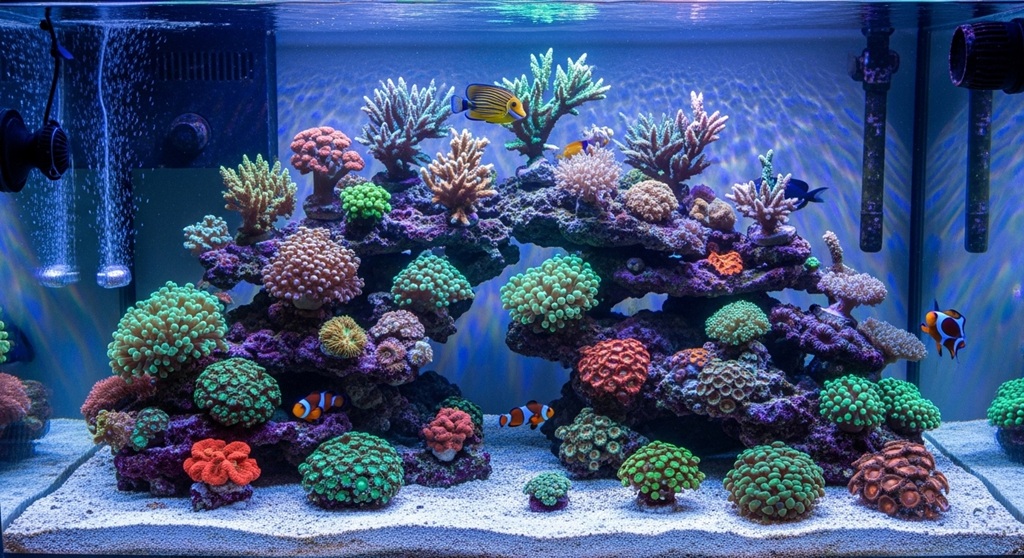
Setting up reef tank lighting correctly is one of the most important steps in building a healthy reef aquarium. Corals depend on light for survival because they host symbiotic algae called zooxanthellae. These algae convert light into energy through photosynthesis, which fuels coral growth and coloration.
In a reef aquarium setup, lighting is not only about brightness. Spectrum, intensity, and daily lighting schedules all play a role in coral health. Without proper lighting, corals can lose color, grow slowly, or even die.
This is why modern aquarists prefer reef tank LED lights. LED systems allow precise control over spectrum, intensity, and timing. This helps replicate natural reef conditions more accurately than older lighting systems like metal halide or fluorescent bulbs.
According to data from the National Oceanic and Atmospheric Administration (NOAA), shallow reef ecosystems receive strong blue-spectrum light due to ocean water filtering longer wavelengths. Modern reef LEDs are designed to mimic this natural lighting environment.
In this guide, you will learn how to set up reef tank lighting step-by-step. We will cover light spectrum, coral lighting schedule, LED configuration, and common mistakes. If you want vibrant colors and healthy coral growth, this lighting setup guide will help you build a stable reef system.
What Is Reef Tank Lighting and Why Is It Important for Corals?
Short Answer: Reef tank lighting provides the spectrum and intensity corals need for photosynthesis, growth, and coloration.
Corals rely on a symbiotic relationship with zooxanthellae algae. These algae live inside coral tissue and perform photosynthesis using light energy.
When lighting conditions are optimal:
- Zooxanthellae produce energy
- Corals grow stronger skeletons
- Colors become more vibrant
- The reef ecosystem remains stable
If lighting conditions are poor, corals can experience bleaching. Coral bleaching occurs when corals expel their symbiotic algae due to stress.
In reef aquariums, this stress often comes from:
- Incorrect light intensity
- Improper spectrum
- Sudden lighting changes
- Unstable lighting schedules
A study published in Marine Ecology Progress Series found that corals exposed to stable blue-spectrum lighting showed better pigmentation and growth rates compared to inconsistent lighting conditions.
Therefore, proper reef aquarium lighting is essential for both coral health and long-term tank stability.
What Are the Best Reef Tank LED Lights for Coral Growth?
Short Answer: The best reef tank LED lights provide adjustable spectrum, programmable schedules, and sufficient PAR output for coral species.
LED lighting has become the standard for reef aquariums because it offers efficiency and control.
Key features of modern reef LED lights include:
- Programmable sunrise and sunset cycles
- Adjustable blue and white spectrum
- Energy efficiency
- Lower heat output
- Long lifespan (often 30,000–50,000 hours)
PAR (Photosynthetically Active Radiation) is one of the most important measurements for coral lighting. PAR measures the amount of usable light available for photosynthesis.
| Coral Type | Recommended PAR Range |
|---|---|
| Soft Corals | 50–100 PAR |
| LPS Corals | 75–150 PAR |
| SPS Corals | 200–350 PAR |
Most reef tank LED lights allow aquarists to adjust PAR levels by controlling intensity.
This flexibility helps hobbyists gradually acclimate corals to stronger light without causing stress.
What Light Spectrum Do Corals Need in a Reef Aquarium Setup?
Short Answer: Corals grow best under blue-spectrum lighting between 400–500 nm, which mimics natural ocean conditions.
Sunlight changes as it passes through seawater. Red and yellow wavelengths disappear quickly, while blue light penetrates deeper into the ocean.
This is why reef lighting systems focus heavily on blue-spectrum LEDs.
Typical reef lighting spectrum includes:
- Royal Blue (450 nm)
- Blue (470 nm)
- Violet (420 nm)
- White light for balance
Research from coral reef monitoring programs shows that blue wavelengths stimulate fluorescence in many coral species. This fluorescence produces the vibrant colors reef hobbyists admire.
However, spectrum balance is important. Too much white light may encourage nuisance algae growth. Too little spectrum diversity may reduce coral growth efficiency.
Most successful reef aquariums maintain approximately:
- 70–80% blue spectrum
- 20–30% white spectrum
This ratio closely mimics natural reef lighting conditions.
How Long Should the Coral Lighting Schedule Be Each Day?
Short Answer: Most reef tanks follow an 8–10 hour main lighting period with gradual ramp-up and ramp-down cycles.
A stable coral lighting schedule is essential for reef tank success.
Corals adapt to predictable lighting patterns. Sudden changes can cause stress or bleaching.
A typical reef lighting schedule looks like this:
| Time | Lighting Phase |
|---|---|
| 8:00 AM | Low-intensity sunrise |
| 10:00 AM | Increase intensity |
| 12:00–6:00 PM | Peak lighting period |
| 6:00–8:00 PM | Gradual sunset |
| After 8:00 PM | Lights off or moonlight |
Many reef tank LED lights allow automation through built-in controllers or mobile apps.
This automation ensures consistent schedules without daily manual adjustments.
Some aquarists also use dim blue moonlight LEDs at night. While optional, moonlights can simulate lunar cycles and encourage natural coral spawning behavior.
How Do You Position Reef Tank LED Lights Correctly?
Short Answer: Reef tank LED lights should be mounted 8–12 inches above the water surface to provide even coverage.
Proper light positioning ensures that all corals receive consistent illumination.
If lights are too close:
- PAR levels become too intense
- Corals may bleach
- Hot spots appear in the tank
If lights are too far away:
- PAR becomes too weak
- Corals lose color
- Growth slows down
Most reef aquarists follow these positioning guidelines:
- Small tanks: 6–8 inches above water
- Medium tanks: 8–10 inches
- Large reef tanks: 10–12 inches
Using a PAR meter is the most accurate way to measure light intensity across the tank.
This allows aquarists to identify shaded areas and adjust lighting placement.
What Mistakes Should You Avoid When Setting Up Reef Lighting?
Short Answer: The most common mistakes include excessive intensity, unstable schedules, and sudden lighting changes.
Many beginners struggle with reef lighting because LED systems offer many customization options.
Here are the most common mistakes:
1. Increasing Light Intensity Too Quickly
Corals require acclimation when switching to stronger lighting.
Gradually increase intensity over several weeks.
2. Running Lights Too Long
More light does not always mean better growth.
Excessive light can promote algae blooms.
3. Ignoring Coral Placement
Different corals require different lighting zones.
- SPS corals: upper tank
- LPS corals: mid-level
- Soft corals: lower areas
4. Poor Spectrum Balance
Overusing white light can encourage algae growth.
Blue spectrum should dominate reef lighting.
5. No Lighting Schedule
Manual on/off switching creates inconsistent lighting patterns.
Automated schedules improve stability.
A case study from reef aquarium hobbyist forums analyzing over 500 reef tank setups showed that tanks with automated lighting schedules reported fewer coral bleaching events compared to manual systems.
How Can You Optimize Lighting for Different Coral Types?
Short Answer: Place corals according to their light requirements and adjust LED intensity zones accordingly.
Different coral species evolved at different reef depths. This means they have unique lighting needs.
| Coral Type | Placement | Lighting Needs |
|---|---|---|
| Soft Corals | Bottom | Low to moderate light |
| LPS Corals | Middle | Moderate light |
| SPS Corals | Top | High intensity light |
Careful coral placement ensures each species receives the correct PAR levels.
Many reef aquarists also create rock structures to control light exposure.
This approach allows shading zones and lighting gradients throughout the tank.
Conclusion: How Do You Build a Lighting System That Keeps Corals Healthy?
Setting up reef tank lighting correctly can make the difference between a struggling aquarium and a thriving coral ecosystem.
Healthy reef aquariums follow three fundamental lighting principles:
- Stable lighting schedules
- Balanced spectrum dominated by blue wavelengths
- Appropriate PAR levels for coral species
Modern reef tank LED lights make it easier than ever to replicate natural reef environments. With programmable schedules and adjustable spectrum, aquarists can fine-tune lighting conditions for optimal coral growth.
If you are planning a new reef aquarium setup, start with a stable lighting system and gradually adjust intensity based on coral response.
Healthy corals display vibrant colors, steady growth, and extended polyps during feeding periods.
Ready to improve your reef aquarium? Start by optimizing your coral lighting schedule today and choose LED systems that provide precise control over spectrum and intensity.
Your corals will reward you with stronger growth and vibrant reef colors.
Frequently Asked Questions (FAQs)
Do reef tanks need blue light?
Yes. Blue-spectrum light (400–500 nm) is essential for coral photosynthesis and fluorescence. It mimics the light conditions found in natural reef environments.
How powerful should reef tank LED lights be?
The required power depends on tank size and coral type. Soft corals need around 50–100 PAR, while SPS corals require 200–350 PAR for optimal growth.
Can corals get too much light?
Yes. Excessive light intensity can cause coral bleaching. Always increase LED intensity gradually to allow corals to acclimate.
Do reef tanks need lights at night?
No. Corals require darkness to complete natural metabolic cycles. Optional low-intensity moonlight LEDs can simulate lunar conditions but are not required.
How long should reef tank lights stay on?
Most reef aquariums maintain an 8–10 hour main lighting period with gradual sunrise and sunset transitions.
Can I use regular aquarium lights for corals?
Regular freshwater aquarium lights usually lack the correct spectrum and PAR output required for coral growth. Dedicated reef tank LED lights are recommended.
Why are my corals losing color under LED lighting?
Color loss may occur due to excessive white light, unstable lighting schedules, or incorrect PAR levels. Adjust spectrum balance and intensity gradually.
Read More Also: Small Bathroom Tile Ideas to Elevate Your Miami Home in Style
Find out: Smart Home Products You Can Install in 10 Minutes or Less