
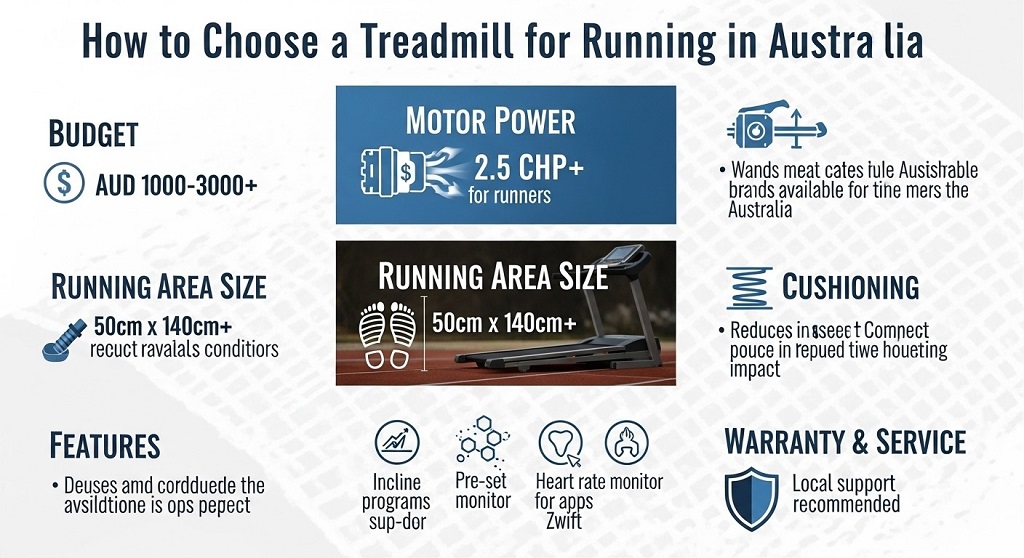
To choose a treadmill for running in Australia, focus on motor power, running deck size, cushioning, user weight capacity, warranty, and how well the machine handles Australian climate and voltage standards.
If you run regularly and want reliable indoor training, choosing the wrong treadmill will cost you money, time, and motivation. Many buyers focus only on price. That’s the problem. A treadmill that looks good online can struggle with heat, wear out fast, or feel unstable during runs.
This guide breaks down how to choose a treadmill for running based on real runner needs in Australia. No hype. No buzzwords. Just facts, examples, and practical advice.
Whether you are training for 5Ks, half marathons, or daily fitness, this article answers the exact questions Australian runners ask before buying.
Why do runners in Australia need a different approach when choosing a treadmill?
Short answer: Australian climate, power standards, and running habits demand treadmills with stronger motors, better cooling, and solid warranties.
Problem: Many treadmills sold online are imported models built for mild climates. In Australia, heat and humidity can push motors harder. Cheaper units overheat, lose speed consistency, or fail within a year.
Agitation: According to consumer repair data from fitness equipment service providers in NSW and Victoria, motor and control board failures are among the top issues reported within the first 18 months for low-grade treadmills used for running.
Solution: When choosing a running treadmill in Australia, prioritize continuous-duty motors, strong ventilation, and brands with local service centers.
What motor power is required for running on a treadmill?
Short answer: For running, choose a treadmill with at least 2.75–3.5 CHP (continuous horsepower).
Walking treadmills and running treadmills are not the same. Running creates repeated impact and constant load on the motor.
- Jogging: Minimum 2.5 CHP
- Regular running: 3.0 CHP or higher
- Interval or sprint training: 3.5 CHP+
Case study: A Melbourne-based running club tested entry-level 2.0 CHP treadmills during winter training. Machines used for 30–45 minute runs failed within 6–9 months. Units with 3.0 CHP motors lasted over 3 years under similar use.
If you want a running treadmill in Australia that lasts, motor power is non-negotiable.
How large should the running belt be for comfortable running?
Short answer: Runners need a belt at least 140 cm long and 50 cm wide.
Stride length increases as speed increases. A short deck forces you to shorten your stride or risk stepping off the belt.
| Runner Height | Recommended Belt Length |
|---|---|
| Under 170 cm | 140 cm |
| 170–185 cm | 145–150 cm |
| Over 185 cm | 150+ cm |
Australian runners often train indoors during heatwaves or bushfire seasons. Long sessions require space and safety. A cramped belt increases injury risk.
How important is cushioning for running treadmills?
Short answer: Cushioning matters more for runners than walkers and should reduce joint impact without feeling unstable.
Problem: Road running already stresses knees and ankles. Poor treadmill cushioning doubles the strain.
Agitation: Sports physiotherapists in Australia report increased knee pain among runners using hard-deck treadmills for winter training.
Solution: Look for treadmills with adjustable or multi-zone cushioning systems. Avoid decks that feel soft only in the center and hard on the edges.
A good running treadmill should feel firm but forgiving. If it feels bouncy, it’s wrong.
What speed range should a running treadmill support?
Short answer: A running treadmill should support at least 18–20 km/h.
Even if you don’t sprint daily, speed headroom matters. Motors perform better when not running at maximum output.
- Beginner runners: 14–16 km/h minimum
- Intermediate runners: 18 km/h
- Advanced runners: 20 km/h+
Running treadmills in Australia often advertise speed without clarifying motor strain. Always match speed with motor power.
Does user weight capacity really matter?
Short answer: Yes. Choose a treadmill rated at least 20–25 kg above your body weight.
Weight ratings are based on walking, not running. Running multiplies impact forces.
Example: A runner weighing 85 kg should choose a treadmill rated for at least 110 kg. This improves motor life and frame stability.
Is incline important for treadmill running?
Short answer: Incline improves training quality and reduces repetitive stress.
Incline running activates glutes and calves while lowering joint impact at the same pace.
- Minimum incline: 10%
- Ideal incline for runners: 12–15%
Australian runners training for outdoor events benefit from incline simulation due to varied terrain.
How does treadmill build quality affect long-term use?
Short answer: Heavier frames last longer and feel safer during fast runs.
A running treadmill should weigh at least 85–100 kg. Lighter units shift and vibrate at speed.
Check:
- Steel frame thickness
- Roller diameter (minimum 50 mm)
- Deck thickness (18–22 mm)
What warranty should runners expect in Australia?
Short answer: Look for lifetime frame, 5–10 years motor, and at least 1–2 years parts.
Australian Consumer Law protects buyers, but only if the brand has local support.
A treadmill without local service is a risk, especially for runners.
Are foldable treadmills good for running?
Short answer: Some are, but many are not.
Foldable treadmills often sacrifice frame strength. If space is limited, choose a foldable model designed for running, not walking.
Check hinge strength and deck lock systems.
How much should you budget for a running treadmill in Australia?
Short answer: Expect to spend AUD $1,800–$3,500 for reliable running performance.
| Budget | Suitable For |
|---|---|
| Under $1,500 | Walking only |
| $1,800–$2,500 | Beginner runners |
| $2,500–$3,500+ | Serious runners |
Spending less often leads to replacement within 12–24 months.
How do you choose a treadmill brand in Australia?
Short answer: Choose brands with Australian warehouses, service teams, and parts availability.
Imported-only brands may offer lower prices but create repair delays.
Always check:
- Local service coverage
- Spare part availability
- Customer reviews from Australian buyers
Conclusion: How should you choose a treadmill for running?
Choosing a treadmill for running is not about deals or features lists. It is about matching machine strength to your running habits.
Australian runners face heat, long indoor sessions, and higher wear. A proper running treadmill must have a strong motor, long deck, solid cushioning, and local support.
If you treat a treadmill like a long-term training partner instead of a gadget, you will run more consistently and avoid injury.
Call to Action: Before you buy, list your running frequency, body weight, and available space. Compare only treadmills built for running in Australia. If needed, test-run in-store. Your joints and wallet will thank you.
Frequently Asked Questions
How do I choose a treadmill for running at home?
Choose a treadmill with at least 3.0 CHP motor, long belt, strong cushioning, and a weight rating above your body weight.
Is a running treadmill different from a walking treadmill?
Yes. Running treadmills have stronger motors, reinforced frames, and larger decks.
What is the best treadmill speed for runners?
Runners should choose treadmills that reach at least 18 km/h for long-term reliability.
Can cheap treadmills handle running?
Most cheap treadmills are built for walking. Regular running shortens their lifespan.
Are treadmills safe for daily running?
Yes, if cushioning and motor power are adequate and you vary incline and speed.
How long does a good running treadmill last?
With proper maintenance, quality running treadmills last 5–10 years.
Do Australian power standards affect treadmill choice?
Yes. Always buy treadmills designed for Australian voltage and outlets.
Related Topics: 4 Things To Consider Before Buying a Smart Home Security System
Related Topics: Do You Need a Zoning Permit to Rent Your Home? Here’s the Truth