
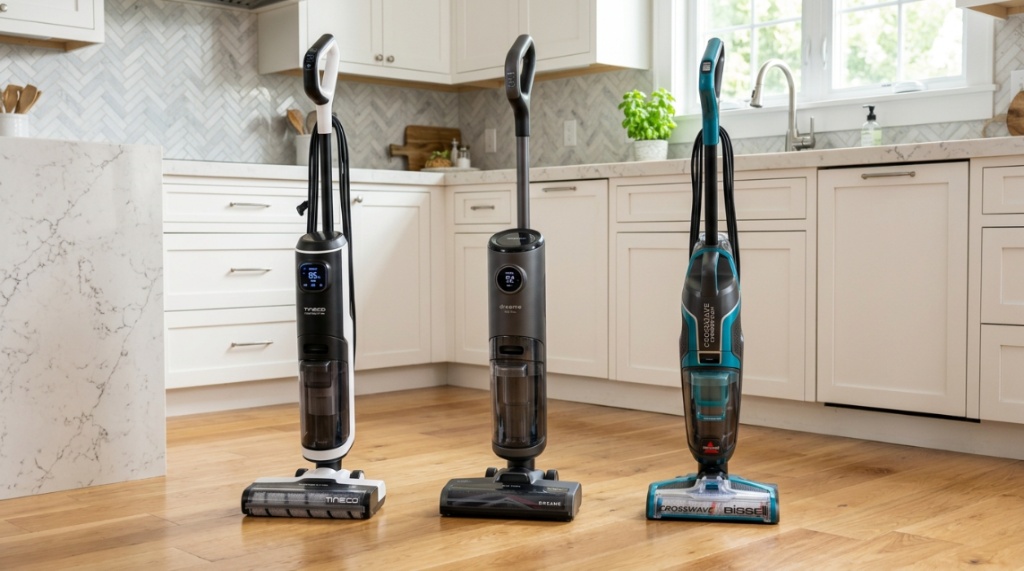
You have just mopped the kitchen floor, only to watch your toddler knock over a bowl of spaghetti. Your first instinct is to grab a mop and bucket. But what if you had a machine that could suck up the sauce and wash the floor in one pass? That is the promise of wet-dry vacuums. However, choosing between the top brands feels like a minefield. This Tineco vs Dreame vs Bissell breakdown will help you stop guessing and pick the tool that actually fits your home. We will cut through the marketing noise and look at real-world cleaning power, maintenance, and cost.
What Exactly Are Wet Dry Vacuums and Why Do You Need One?
Defining the Category
A wet-dry vacuum is a cordless, all-in-one cleaning device that vacuums dry debris (like crumbs and pet hair) and simultaneously mops hard floors with clean water. Unlike a traditional mop, these machines separate dirty water from clean water in different tanks. You never push a grimy mop across your floor again.
Saving Time and Effort
These machines cut cleaning time in half. Instead of sweeping, then mopping, then rinsing the mop, you take one walk across the room. The machine does the heavy lifting. If you have kids or pets, the time saved every week adds up to hours of freedom.
Who Benefits Most?
Families with children who spill frequently, pet owners dealing with muddy paw prints, and anyone who hates wringing out a mop will find these tools life-changing. They work best on sealed hardwood, tile, vinyl, and laminate floors. They are not designed for deep carpet cleaning.
Tineco vs Dreame vs Bissell: How Do the Core Technologies Differ?
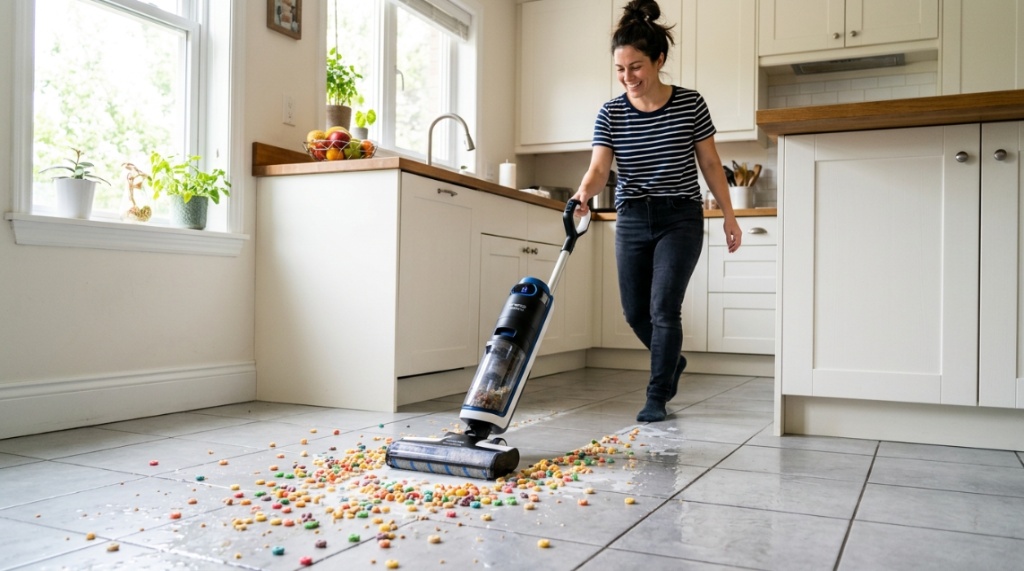
Sensor Technology: The Tineco Advantage
Tineco leads the pack with its iLoop sensor technology. This system detects how dirty the water is and automatically adjusts the water flow and suction power. If you hit a sticky spill, the machine kicks into high gear. When cleaning a barely dusty floor, it conserves power and battery life. This smart approach prevents over-wetting and streaks.
Edge Cleaning and Design: Dreame Focus
Dreame products, like the H12 series, focus heavily on edge-to-edge cleaning. The brush roller extends extremely close to the baseboard. This design feature means you rarely need to manually wipe corners. Dreame also invests in ergonomic handles that make pushing the machine feel lighter than its actual weight.
Brush Roll and Agitation: Bissell Approach
Bissell relies on aggressive brush roll agitation to scrub dirt loose. Their machines often have more powerful spinning brushes that physically scrape grime off textured tile. The trade-off is that the brush roll may require more frequent cleaning to remove tangled hair. Bissell prioritizes scrubbing power over smart sensors.
Which Brand Offers the Best Cleaning Performance on Hard Floors?
Handling Wet Spills and Dried Stains
For fresh wet spills like juice or milk, all three brands perform well. The difference appears on dried stains. Tineco’s automatic sensor helps by applying additional water and re-scrubbing the area. Dreame’s high suction power lifts dried mud effectively. Bissell’s scrub brush physically attacks dried spaghetti sauce better than the others, making it the best pick for stubborn messes.
Pet Hair and Human Hair Pickup
Hair wrap is the enemy of all wet-dry vacuums. Tineco has a self-cleaning system that resists hair tangling on the brush roll. Dreame includes a comb that cuts hair before it wraps. Bissell requires you to manually cut hair off the brush roll. If you have long hair or a shedding dog, Tineco or Dreame will save you the most frustration.
Streak-Free Drying Time
Floor streaks happen when too much water is left behind. Tineco’s iLoop sensor consistently leaves floors dry within 60 seconds. Dreame is close behind, with slightly more residual moisture on hard surfaces. Bissell tends to leave more water on the floor, especially in eco mode. If you want a walkable floor immediately, Tineco wins this round.
How Do Battery Life and Charging Compare in Real Use?
Runtime Per Charge
Most wet-dry vacuums offer 25 to 35 minutes of runtime. Tineco models generally run for 35 minutes in auto mode. Dreame offers 30 to 35 minutes depending on the speed selected. Bissell runs closer to 25 minutes at high power. For a small apartment, 25 minutes is enough. For a house with 1,500 square feet of hard flooring, Tineco or Dreame provides a safer buffer.
Charging Time and Convenience
Tineco and Dreame batteries typically charge fully in 3 to 4 hours. Bissell charges in 4 to 5 hours. None of these machines have a removable battery on standard models. That means you cannot swap a dead battery for a fresh one mid-cleaning. You must plan to charge the unit after each use.
Battery Degradation Over Time
Lithium-ion batteries lose capacity after hundreds of charges. Tineco and Dreame offer replacement battery services, though installation is a minor hassle. Bissell does not widely offer user-replaceable batteries for their wet-dry models. If long-term use is a priority, check that the brand sells replacement battery packs for your specific model.
Which Brand Is Easier to Clean and Maintain?
Dirty Water Tank Maintenance
All three brands require you to empty and rinse the dirty water tank after every use. If you forget, the tank develops a sour smell within 24 hours. Tineco tanks are usually larger, around 0.85 liters, which means fewer trips to the sink. Dreame tanks hold slightly less. Bissell tanks are smaller and easier to rinse out manually due to wider openings.
Brush Roll and Filter Care
Tineco and Dreame include self-cleaning modes that run water through the brush roll after cleaning. This feature extends brush life. Bissell requires you to remove and rinse the brush by hand. The filters on all three are washable but must be fully dried before reuse. Tineco filters are the easiest to access and remove.
Long-Term Durability and Warranty
Tineco offers a 2-year warranty on most models. Dreame provides a 1 to 2-year warranty depending on the retailer. Bissell offers a 2-year warranty on their higher-end models. Customer reviews suggest that Tineco and Dreame have fewer mechanical failures within the first year. Bissell users occasionally report motor issues after heavy daily use.
What Should You Pay for a Tineco, Dreame, or Bissell Wet Dry Vacuum?
Budget Models Under $250
Bissell dominates this price range. Their CrossWave and PetPro models offer solid performance for the price. You get basic wet-dry functionality without smart sensors. These are excellent options if you are testing the water on this category or need a secondary cleaner for a small apartment.
Mid-Range Models $250 to $450
Tineco and Dreame compete fiercely here. Tineco Pure One and Dreame H12 Pro fall in this range. You gain sensor technology, better battery life, and self-cleaning features. This is the sweet spot for most homeowners who want premium features without paying flagship prices.
Premium Models Over $450
Tineco Floor One S5 and Dreame H12 Dual top out in this bracket. These include OLED displays, voice assistants, and faster drying times. Bissell has few offerings in this price tier. If you want the absolute best cleaning intelligence and build quality, paying extra for Tineco or Dreame is justified.
For a deeper look at region-specific pricing and value, check out this comparison on Tineco vs Dreame vs Bissell to see how humidity and floor types impact performance in hot climates.
Can You Use These Vacuums on Area Rugs and Carpets?
Low-Pile Rugs Only
Wet-dry vacuums are not replacement for upright carpet cleaners. You can safely use them on low-pile mats and thin rugs. The machine dispenses water onto the rug, so thicker carpets remain wet for hours and may develop mold underneath. Tineco explicitly warns against using their wet mode on high-pile carpets.
Dry Vacuum Mode for Carpets
Most models offer a dry-only vacuum mode. In this setting, you can pick up dust and crumbs from medium-pile carpets without dispensing water. This is a useful bonus feature, but the suction power is usually lower than a dedicated stick vacuum. Use it for quick maintenance, not deep carpet cleaning.
Safest Practices for Mixed Flooring Homes
If your home has tile in the kitchen and carpet in the living room, buy a model with a quick-switch mode. Tineco and Dreame allow you to toggle between wet and dry instantly. Bissell requires you to remove the water tank completely for dry-only vacuuming, which is less convenient for mixed flooring.
How Do Smart Features and App Connectivity Improve Usability?
Voice Prompts and Display Screens
Tineco leads with voice prompts that tell you when to clean the tank or switch modes. Dreame includes digital displays showing battery percentage and self-cleaning status. Bissell generally uses simple button controls with no voice guidance. If you prefer a quiet cleaning experience, Tineco’s voice prompts can be turned off in settings.
App Integration and Usage Logs
Tineco and Dreame offer smartphone apps that track cleaning time, floor coverage, and maintenance reminders. These apps are useful for monitoring battery health. Bissell does not offer app connectivity on their current wet-dry models. If you enjoy data-driven cleaning habits, Tineco or Dreame will satisfy that curiosity.
Auto vs Manual Power Modes
Tineco’s auto mode adjusts power based on dirt detection. Dreame offers manual high and low settings. Bissell provides a simple two-mode switch: wet vacuum and dry vacuum. Tineco’s auto mode is genuinely useful because it prevents battery waste. Dreame’s manual mode gives you more control over scrubbing intensity.
Which Brand Is Best for Allergies and Dust Sensitivity?
HEPA Filtration and Sealed Systems
Tineco and Dreame use high-efficiency filters that capture 99.9% of fine dust particles. Their systems are sealed to prevent dirty air from leaking back into the room. Bissell uses washable filters that are effective but not certified as HEPA on most models. For dust allergy sufferers, Tineco is the safest choice,
For more cleaning recommendations, check out our guide on finding the best Hoover vacuum for pet hair without wasting money.
Wet Filtration Trapping Allergens
Because these machines use water to clean, they naturally trap airborne allergens during the mopping process. The wet sediment ends up in the dirty tank. This method is superior to dry vacuuming alone. All three brands benefit from this wet filtration effect, but Tineco’s sealed system ensures no particles escape during disposal.
Exhaust Air Quality
Dreame machines blow exhaust air upward rather than directly onto the floor. This reduces dust re-circulation. Tineco’s exhaust is directional and can be pointed away from your face. Bissell exhaust vents are closer to the floor, which can sometimes blow dust onto baseboards. These small differences matter for allergy management.
Frequently Asked Questions
Can I use Tineco, Dreame, or Bissell on unsealed hardwood floors?
No. You should never use any wet-dry vacuum on unsealed or waxed wood floors. The water will seep into the wood and cause swelling, warping, or discoloration. Always check that your hardwood has a sealed polyurethane finish before using any of these machines.
How often should I replace the brush roll on these vacuums?
Replace the brush roll every 6 to 12 months depending on use. If you notice reduced scrubbing action, visible bristle wear, or persistent tangles, it is time for a new roll. Tineco and Dreame brush rolls are widely available online. Bissell brush rolls are sold at most retail stores.
Do these vacuums work with cleaning solutions or plain water?
All three brands recommend using their proprietary cleaning solutions for best results. Plain water works for basic cleaning, but it does not sanitize or break down grease as effectively. Using third-party solutions may void the warranty. Tineco and Dreame solutions are concentrated, so a bottle lasts many months.
Why does my wet-dry vacuum smell bad after a week?
The most common cause is failing to empty and dry the dirty water tank after each use. Bacteria and mold grow in stagnant water. Always rinse the tank, remove the filter, and allow all parts to air dry completely before storing the machine. Tineco and Dreame self-cleaning cycles help, but manual rinsing is still necessary.
Is Bissell easier to repair than Tineco or Dreame?
Yes. Bissell has a wider network of repair centers and replacement parts are easier to find in local stores. Tineco and Dreame are more reliant on online warranty claims and mail-in repairs. If you prefer DIY maintenance, Bissell is the simpler brand to keep running.
Can these machines replace both a vacuum and a mop completely?
For hard floors, yes. For homes with significant carpet area, no. You will still need a traditional upright vacuum or a robot vacuum for carpeted rooms. Wet-dry vacuums excel on hard floors but cannot deep clean upholstery or high-pile carpets.
Which brand has the quietest operation?
Dreame is generally the quietest, operating around 72 decibels on standard mode. Tineco runs at about 75 decibels. Bissell is the loudest, reaching 80 decibels on high power. For households with napping babies or noise-sensitive pets, Dreame is the most considerate choice.
Conclusion
Choosing between Tineco, Dreame, and Bissell ultimately comes down to your floor type, your tolerance for manual maintenance, and your budget. Tineco wins for smart sensor technology and allergy-friendly filtration. Dreame offers the best edge cleaning and quietest operation. Bissell provides the most aggressive scrubbing at the lowest price point. For a balanced recommendation, pick Tineco if you value automation and convenience. Pick Dreame if you want smooth edge cleaning and quiet performance. Pick Bissell if you need a budget-friendly workhorse for stubborn stains. Whichever you choose, you will wonder how you ever lived without a wet-dry vacuum.