
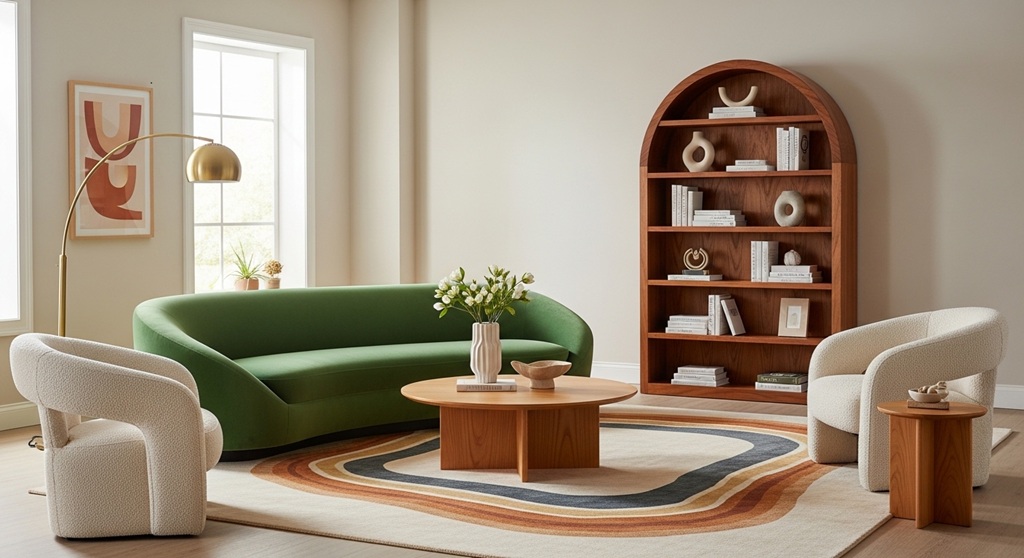
Sharp edges dominated interiors for years. Straight sofas. Boxy tables. Flat layouts. But homes in 2026 are changing fast.
Curved furniture is now one of the most practical and visually effective upgrades for modern interiors. It softens rooms, improves movement flow, and creates a welcoming environment without requiring a full renovation.
The problem many homeowners face is simple. Curved furniture looks stylish online but feels difficult to use in real spaces. People worry about placement mistakes, mismatched styles, and wasted money.
This guide solves that problem step by step. You’ll learn exactly how curved furniture works, where to place it, which materials to choose, and how to make the trend practical for everyday living.
What Is Curved Furniture and Why Is It Trending in 2026?
Curved furniture uses rounded silhouettes instead of straight lines to create softer visual movement, improve spatial flow, and reduce harsh edges inside a room. In 2026, designers prefer curved layouts because they make spaces feel larger, calmer, and more human-centered while working across modern, classic, and compact interiors.
Snippet Answer: Curved furniture replaces rigid lines with soft shapes that improve movement flow, reduce visual tension, and make rooms feel larger and more inviting. In 2026 interiors, curved sofas, round tables, and arched shelving help balance minimal layouts while adding comfort, elegance, and spatial efficiency without requiring structural renovation.
Curved furniture is not just a style preference. It is a response to how people now use living spaces. Homes must support work, relaxation, and social interaction in the same environment.
Rounded shapes naturally guide movement. They reduce visual clutter and help small rooms feel open. Unlike rectangular furniture, curved silhouettes do not block pathways aggressively.
Interior designers also use curves to break monotony. When every object follows straight geometry, rooms appear rigid and predictable. Adding one curved piece instantly changes the energy of a layout.
The trend also connects to biophilic design. Organic shapes mimic natural environments. This makes interiors feel calmer and more comfortable over long periods.
How Does Curved Furniture Improve Room Layout Flow?
Curved furniture improves layout flow by removing sharp visual stops and allowing movement paths to feel continuous and natural. Rounded edges reduce congestion in small spaces and help furniture arrangements feel intentional instead of crowded or forced.
Most people arrange furniture along walls. This creates unused center space and limits movement flexibility.
Curved furniture encourages central placement. A rounded sofa or oval table becomes a focal point rather than a boundary object.
This approach improves traffic circulation. Instead of walking around corners, people move smoothly through the room.
Curves also reduce psychological tension. Research in spatial perception shows people prefer environments without aggressive edges because they feel safer and more relaxed.
- Improves walking pathways
- Reduces corner congestion
- Creates visual balance
- Encourages social interaction zones
Even one curved furniture piece can reorganize how a room functions. Designers often begin layouts with a curved anchor object and build around it.
Which Rooms Benefit Most From Curved Furniture?
Living rooms, bedrooms, entryways, and compact apartments benefit the most from curved furniture because rounded shapes improve comfort zones, soften narrow layouts, and make small interiors appear more spacious without structural changes.
Curved furniture works best where people gather or move frequently.
Living rooms benefit immediately. A curved sofa improves conversation positioning and removes the rigid feeling created by straight seating rows.
Bedrooms also improve with curved headboards and rounded nightstands. These elements create a calmer environment suitable for rest.
Entryways become more welcoming with curved benches or oval mirrors. Instead of acting as transition corridors, they become styled introduction zones.
- Living rooms gain social flexibility
- Bedrooms feel calmer and softer
- Entryways appear wider
- Small apartments gain visual space
Even kitchens benefit from curved islands or round dining tables that improve circulation in tight layouts.
How Do You Mix Curved Furniture With Straight-Line Interiors?
You can mix curved furniture with straight-line interiors by using one rounded focal piece per room, balancing it with neutral textures, and maintaining symmetry through lighting or rugs so the space feels intentional instead of mismatched.
Many homeowners hesitate because their existing furniture is rectangular.
The solution is contrast balance. Curves should complement structure, not replace it entirely.
Start with a single curved anchor piece such as a sofa or coffee table. Then support it using straight accessories like shelving or lighting.
This prevents visual overload while introducing softness.
- Use one curved focal item
- Keep surrounding furniture simple
- Match colors before matching shapes
- Repeat curves through décor accents
Repeating small curved elements like mirrors, lamps, or rugs creates harmony without requiring major purchases.
Which Materials Work Best for Curved Furniture in 2026?
The best materials for curved furniture in 2026 include boucle fabric, molded wood, velvet upholstery, bent metal frames, and engineered foam structures because they maintain shape stability while supporting ergonomic comfort and long-term durability.
Material choice affects both appearance and usability.
Soft fabrics emphasize the comfort advantage of curved furniture. Structured materials highlight architectural impact.
| Material | Best Use | Advantages | Limitations |
|---|---|---|---|
| Boucle | Sofas & chairs | Soft texture, modern look | Requires cleaning care |
| Velvet | Accent seating | Luxury appearance | Shows pressure marks |
| Molded wood | Tables & frames | Strong structure | Higher cost |
| Bent metal | Modern bases | Durable support | Industrial feel |
| Engineered foam | Compact sofas | Flexible shaping | Quality varies |
Combining soft upholstery with structured bases creates the most balanced results.
How Do You Choose the Right Curved Sofa Size?
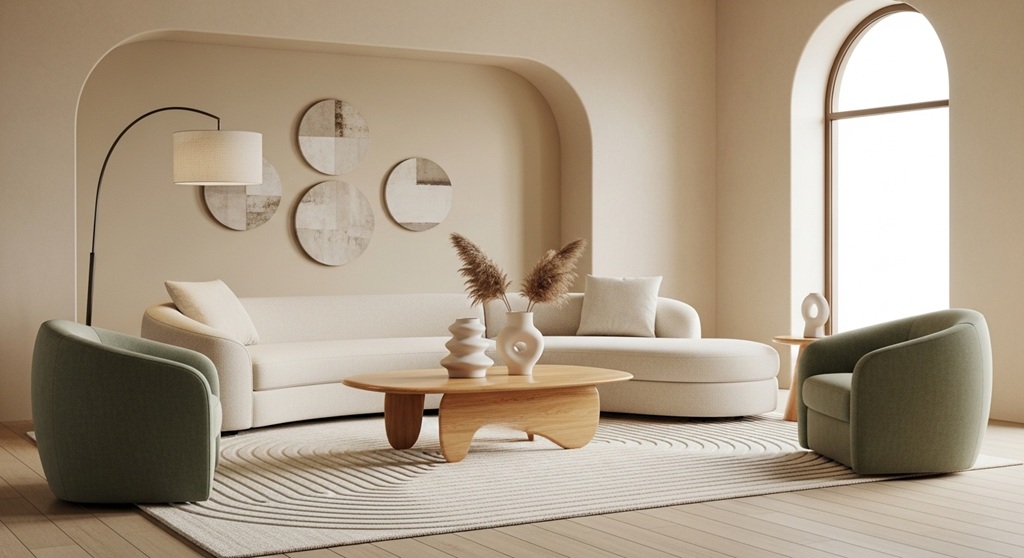
Choose the right curved sofa size by measuring walkway clearance, identifying the room’s focal axis, and ensuring the sofa supports conversation distance without blocking circulation paths or windows.
Curved sofas require more planning than rectangular sofas.
Because they extend outward, they influence room geometry more strongly.
Start by measuring walking clearance. Maintain at least 30 inches of movement space around major furniture pieces.
Next, identify your visual center. The sofa should face either a conversation zone, media wall, or window view.
Avoid pushing curved sofas against walls unless the room is extremely small.
- Measure room depth first
- Protect walking pathways
- Align with focal points
- Leave breathing space behind curves
These adjustments prevent curved furniture from feeling oversized or misplaced.
What Decorating Mistakes Should You Avoid With Curved Furniture?
The most common curved furniture mistakes include overcrowding layouts, mixing too many curved items in one space, ignoring symmetry anchors, and choosing oversized pieces that disrupt circulation flow.
Curved furniture works best when used strategically.
Overusing rounded shapes removes contrast and weakens visual structure.
Instead of adding multiple curved items immediately, introduce one primary piece and observe how the space responds.
Lighting also plays a major role. Without directional lighting, curves lose their sculptural effect.
- Avoid placing curves against tight walls
- Do not combine too many rounded pieces
- Maintain layout symmetry
- Match scale with room size
Balanced placement ensures curved furniture enhances rather than overwhelms a room.
How Can Small Homes Use Curved Furniture Effectively?
Small homes can use curved furniture effectively by selecting compact rounded seating, oval tables instead of rectangular ones, and arched mirrors that expand visual depth without consuming additional floor space.
Small interiors benefit the most from curved geometry.
Rounded edges reduce collision points and make navigation easier in tight layouts.
Oval dining tables allow extra seating without sharp corners blocking movement.
Curved storage units also reduce visual heaviness compared to square cabinets.
- Use arched mirrors for depth illusion
- Select slim curved sofas
- Replace square tables with oval versions
- Add rounded lighting fixtures
These adjustments improve usability without reducing functionality.
Conclusion: Why Curved Furniture Is the Smartest Upgrade for 2026 Interiors
Curved furniture solves one of the biggest problems in modern interiors. Most homes feel structured but not comfortable.
Rounded silhouettes improve movement flow, soften visual tension, and create natural gathering zones without requiring expensive renovations.
Instead of replacing entire furniture sets, start with one curved focal piece. A sofa, table, or mirror can reshape the entire atmosphere of a room.
Choose materials carefully. Maintain layout balance. Protect walking pathways.
These steps ensure the trend works practically rather than cosmetically.
If you want your space to feel modern, welcoming, and efficient in 2026, curved furniture is one of the simplest upgrades you can make today.
Start with one room. Test one curved piece. Then expand your layout gradually for long-term results.
Frequently Asked Questions
Is curved furniture suitable for small apartments?
Yes. Curved furniture improves circulation flow and reduces corner congestion, making compact spaces feel larger and easier to navigate compared to rigid rectangular layouts.
Does curved furniture cost more than regular furniture?
Some curved pieces cost slightly more due to specialized manufacturing, but many mid-range options are now widely available as the trend becomes mainstream in 2026.
Can curved sofas work against walls?
They can, but placement slightly away from walls usually creates better visual balance and improves movement flow around the furniture.
Which curved furniture piece should beginners buy first?
A curved coffee table or accent chair is the safest starting point because it introduces softness without changing the entire room layout.
Do curved shapes match minimalist interiors?
Yes. Curved furniture complements minimalist spaces by adding softness while preserving clean visual structure.
Are curved tables better than rectangular tables?
Oval and round tables improve seating flexibility and circulation, especially in smaller dining areas.
Is curved furniture only a temporary trend?
No. Curved geometry has existed in interior design for decades and continues evolving due to its ergonomic and spatial advantages.
Read More Also: Coconut Grove Miami Real Estate
Find out: Do You Need a Zoning Permit to Rent Your Home? Here’s the Truth