

Kitchen renovations can cost thousands of dollars and take weeks to complete. However, there’s a budget-friendly solution that can transform your space in just a weekend. Many homeowners don’t realize they can update their kitchen’s appearance without major construction work. The experts at Sherwood Blog have shared valuable insights on affordable kitchen makeovers that deliver impressive results.
Laminate countertops were extremely popular in past decades due to their affordability and durability. Unfortunately, these surfaces can look dated and worn over time. Additionally, replacing them involves significant expense and disruption to your daily routine. Therefore, painting offers an excellent alternative for homeowners seeking a fresh look.
Many people wonder if this DIY approach actually works. The answer is yes – can you paint laminate countertops successfully with proper preparation and technique. Furthermore, this method costs a fraction of replacement while delivering stunning visual results. However, success depends on following the correct steps and using appropriate materials.
Understanding Laminate Countertops
Laminate countertops consist of multiple layers pressed together under high heat and pressure. The surface layer features a decorative pattern or color sealed beneath a clear protective coating. These countertops became popular because they’re affordable, easy to install, and available in numerous designs.
Over time, laminate surfaces can develop scratches, stains, and chips. Additionally, the colors and patterns may appear outdated compared to current design trends. However, the underlying structure often remains sound and functional. Therefore, painting provides an opportunity to refresh the appearance without structural changes.
The smooth, non-porous surface of laminate presents unique challenges for paint adhesion. Traditional paints may not bond properly without proper preparation. Additionally, the surface must withstand daily kitchen activities including heat, moisture, and frequent cleaning. Therefore, specific techniques and products are necessary for lasting results.
Benefits of Painting Laminate Countertops
Cost savings represent the primary advantage of painting over replacement. New countertops can cost several thousand dollars including materials and installation. However, painting typically costs under $200 for an average kitchen. Additionally, you can complete the project yourself without hiring contractors.
Time efficiency offers another significant benefit. Countertop replacement often requires several days or weeks to complete. Furthermore, you may need to relocate temporarily during major renovations. However, painting can be finished over a long weekend with minimal disruption to your routine.
Creative flexibility allows you to achieve custom looks that might be expensive or impossible with traditional materials. You can create faux finishes, patterns, or colors that perfectly match your design vision. Additionally, you can easily change the appearance again in the future if your tastes evolve.
Environmental considerations make painting an eco-friendly choice. Replacement countertops generate significant waste that ends up in landfills. However, painting extends the life of existing materials while reducing environmental impact. Therefore, this approach supports sustainable home improvement practices.
Essential Materials and Tools
Success requires high-quality materials specifically designed for laminate surfaces. Start with a thorough degreasing cleaner to remove all residue and buildup. Additionally, you’ll need fine-grit sandpaper to create texture for paint adhesion. However, avoid aggressive sanding that could damage the laminate surface.
Primer plays a crucial role in achieving professional results. Choose a bonding primer specifically formulated for slick surfaces like laminate. Furthermore, this primer should be compatible with your chosen topcoat paint. Therefore, purchasing products from the same manufacturer often ensures optimal compatibility.
Paint selection significantly impacts both appearance and durability. Epoxy-based paints offer excellent adhesion and resistance to kitchen conditions. Additionally, acrylic paints designed for cabinets can work well with proper preparation. However, avoid standard wall paints that won’t withstand kitchen wear and tear.
Protective equipment ensures your safety throughout the project. Wear gloves to protect your hands from chemicals and rough surfaces. Additionally, use a respirator mask when sanding or applying primers and paints. Therefore, adequate ventilation becomes essential for indoor air quality.
Step-by-Step Painting Process
Preparation determines the success of your entire project. Begin by removing everything from the countertop surface. Additionally, protect surrounding areas with plastic sheeting and painter’s tape. However, ensure all edges are sealed to prevent paint seepage.
Cleaning requires thorough attention to detail. Use a degreasing agent to remove all cooking residue, soap buildup, and stains. Additionally, pay special attention to areas around the sink and stove where grease accumulates. Therefore, multiple cleaning passes may be necessary for heavily soiled surfaces.
Surface preparation creates the foundation for paint adhesion. Lightly sand the entire surface with fine-grit sandpaper to create texture. However, focus on creating uniform roughness rather than removing material. Additionally, wipe away all dust with a tack cloth before proceeding.
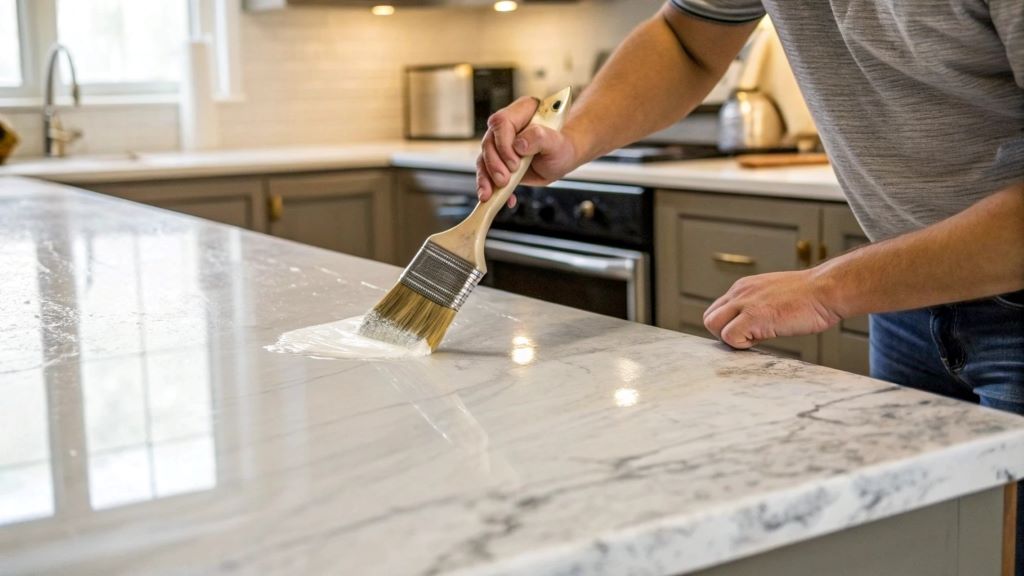
Priming establishes the bond between laminate and topcoat paint. Apply primer in thin, even coats using a high-quality brush or roller. Additionally, work in manageable sections to maintain wet edges. However, avoid over-application that could create drips or uneven coverage.
Paint application requires patience and technique. Apply the first coat thinly and evenly across the entire surface. Additionally, use long, smooth strokes to minimize brush marks. However, expect some imperfections in the first coat that will be corrected with subsequent applications.
Achieving Different Finishes and Styles
Solid colors offer timeless elegance and versatility. Choose neutral tones that complement your kitchen’s existing elements. Additionally, consider how the color will look under different lighting conditions throughout the day. However, darker colors may show wear more readily than lighter alternatives.
Faux stone finishes create the appearance of expensive natural materials. This technique involves layering multiple colors to simulate granite or marble patterns. Additionally, specialized tools help create realistic textures and veining. Therefore, practice on sample boards before working on your actual countertops.
Metallic finishes add contemporary sophistication to modern kitchens. These specialty paints create depth and visual interest through reflective particles. However, surface preparation becomes even more critical for metallic applications. Additionally, the final protective coating must be compatible with metallic pigments.
Pattern creation allows for unique, personalized designs. Stencils can create geometric patterns or decorative borders. Additionally, tape can be used to create clean lines and color blocking effects. Therefore, planning your design carefully ensures professional-looking results.
Maintenance and Longevity
Proper care extends the life of painted laminate countertops significantly. Use gentle cleaners that won’t damage the paint surface. Additionally, avoid abrasive scrubbers that could create scratches or wear patterns. However, most household spills can be cleaned easily with mild soap and water.
Heat protection prevents damage from hot cookware and appliances. Always use trivets or hot pads under hot items. Additionally, avoid placing heated appliances directly on painted surfaces. Therefore, developing good habits protects your investment in the painted finish.
Minor touch-ups maintain the appearance over time. Keep small amounts of leftover paint for addressing chips or scratches. Additionally, lightly sand damaged areas before applying touch-up paint. However, extensive damage may require repainting sections or the entire surface.
Realistic expectations help you enjoy the results longer. Painted countertops won’t be as durable as stone or solid surface materials. Additionally, high-use areas may show wear more quickly than others. Therefore, consider this a medium-term solution rather than a permanent fix.
Common Mistakes to Avoid
Inadequate preparation causes most painting failures. Skipping the cleaning or sanding steps compromises paint adhesion. Additionally, rushing through preparation to save time often results in poor outcomes. Therefore, invest adequate time in these crucial foundation steps.
Wrong product selection leads to disappointing results. Using standard wall paint or incompatible primers creates problems. Additionally, choosing low-quality materials to save money often costs more in the long run. However, research and invest in products designed for your specific application.
Poor application technique affects both appearance and durability. Thick paint coats take longer to dry and may not cure properly. Additionally, brush marks and drips create an unprofessional appearance. Therefore, practice your technique and work systematically across the surface.
Environmental factors influence curing and final results. High humidity slows drying and may affect adhesion. Additionally, temperature extremes can cause application problems. Therefore, choose appropriate weather conditions for your project timeline.
Conclusion
Painting laminate countertops offers an affordable and effective way to update your kitchen without major renovation. This DIY approach can save thousands of dollars while delivering impressive visual results. However, success depends on proper preparation, quality materials, and careful application technique.
The process requires patience and attention to detail throughout each step. Additionally, realistic expectations about durability and maintenance help ensure satisfaction with the results. Therefore, homeowners willing to invest time and effort can achieve beautiful, budget-friendly countertop transformations.
While painted laminate countertops may not last as long as premium replacements, they provide excellent value for the investment. Furthermore, the skills learned during this project can be applied to future home improvement endeavors. Therefore, this approach represents an excellent entry point into DIY kitchen updates.
Frequently Asked Questions
How long do painted laminate countertops last? With proper preparation and quality materials, painted laminate countertops typically last 3-5 years with normal kitchen use. However, durability depends on maintenance habits and usage patterns. Additionally, high-traffic areas may require touch-ups more frequently than others.
Can I paint over any type of laminate countertop? Most laminate surfaces can be painted successfully with proper preparation. However, severely damaged or peeling laminate may not provide adequate foundation for paint. Additionally, textured or heavily patterned surfaces may require extra preparation work to achieve smooth results.
What type of paint works best for laminate countertops? Epoxy-based paints specifically designed for countertops offer the best durability and adhesion. Additionally, high-quality acrylic paints formulated for cabinets can work well with proper primer. However, avoid standard wall paints that won’t withstand kitchen conditions.
How much does it cost to paint laminate countertops? The typical cost ranges from $100-$300 depending on kitchen size and material quality. This includes primer, paint, brushes, sandpaper, and other supplies. Additionally, specialty finishes or tools may increase costs slightly. However, this remains significantly cheaper than replacement options.
Do I need to hire a professional to paint my countertops? Most homeowners can successfully complete this project themselves with proper preparation and patience. However, those uncomfortable with DIY projects or lacking time may prefer professional installation. Additionally, complex finishes or repairs might benefit from professional expertise.
Read More: