
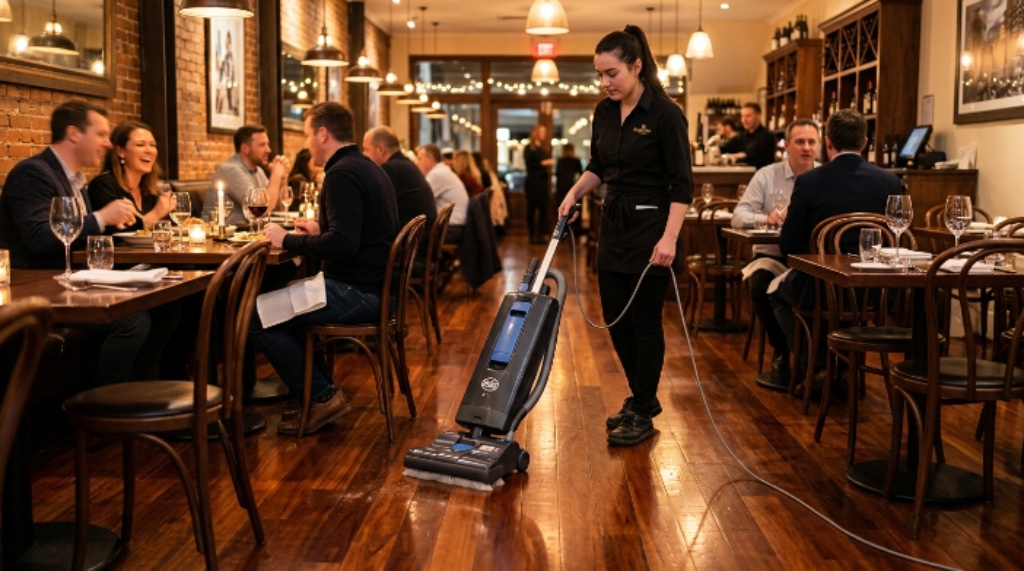
Running a restaurant means keeping every corner spotless. The floors, however, often get overlooked. Hardwood floors add warmth and elegance to any dining space. Therefore, they deserve the right care. Choosing the wrong vacuum can scratch, dull, or even warp your beautiful floors over time. This guide will help you pick the best vacuum for your restaurant’s hardwood floors — one that cleans effectively without causing damage.
Why Hardwood Floors Need Special Attention in Restaurants
Restaurant floors face heavy foot traffic every single day. Guests track in dirt, grease, and debris constantly. Staff rush back and forth during service. All of this adds up quickly.
Hardwood is a natural material. It scratches easily when hard particles are dragged across its surface. A regular vacuum with stiff bristles or a heavy base can leave marks that are difficult to fix. Over time, this damage becomes permanent.
Additionally, restaurant floors are often treated with sealants or wax finishes. Harsh vacuums can strip these coatings away. Once the finish is gone, moisture can seep in. That leads to warping and costly repairs.
Therefore, investing in the right vacuum from the start saves you money in the long run.
Key Features to Look for in a Restaurant Floor Vacuum
Not every vacuum is built for hardwood surfaces. Here are the most important features to consider before making a purchase.
Suction Power and Control
Strong suction is essential in a restaurant setting. You are dealing with food crumbs, dust, hair, and fine debris all at once. However, too much uncontrolled suction can cause the vacuum head to drag and scratch the floor.
Look for a vacuum with adjustable suction settings. This gives you control over how much power is applied. Lower settings work well for delicate hardwood, while higher settings handle heavier debris near entryways.
Floor Head Design
The floor head is the part that touches your hardwood directly. It matters more than most people think. A wide, flat head covers more ground in less time, which is great for large dining areas. Make sure the head moves smoothly and glides without resistance.
Avoid vacuums with heads that have exposed metal parts or rough plastic edges. These can leave scratches with every pass.
Soft Brush Vacuum Attachments
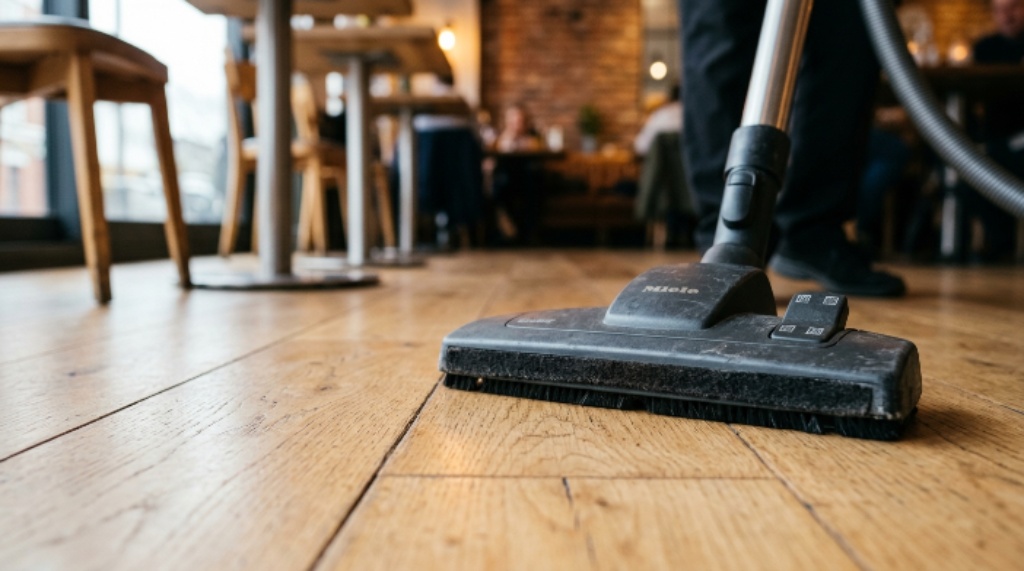
A soft brush vacuum attachment is one of the most important features for hardwood floors. The bristles on these attachments are made from natural or synthetic fibers that are gentle against wood surfaces. They sweep debris into the suction path without scratching the finish.
Many commercial-grade vacuums include interchangeable heads. Always choose the soft brush option when working on hardwood. This small detail makes a big difference in preserving the quality of your floors.
Wheel Quality and Maneuverability
Wheels might seem like a minor detail, but they are important. Hard plastic wheels can leave scuff marks, especially when turning sharply. Look for vacuums with rubber or foam-padded wheels. These roll smoothly across restaurant flooring without leaving a trace.
Also consider how easily the vacuum turns and maneuvers. Restaurant spaces have chairs, tables, and tight corners. A vacuum that is easy to steer saves time during cleaning routines.
The Importance of Using a Non-Scratch Vacuum
Every restaurant owner wants floors that look polished and professional. The easiest way to maintain that appearance is by using a non-scratch vacuum consistently.
A non-scratch vacuum is specifically designed to protect delicate floor surfaces. The materials used in its construction — from the brush bristles to the body casing — are selected to prevent any contact damage. These vacuums often have protective bumpers around their edges as well. This prevents accidental scuffs against chair legs, baseboards, and table bases.
Moreover, using a non-scratch vacuum reduces the need for frequent floor refinishing. Refinishing hardwood is expensive and disruptive to business operations. Prevention is always the smarter choice.
Corded vs. Cordless: Which Works Better for Restaurants?
Both options have real advantages. The right choice depends on the size and layout of your restaurant.
Corded vacuums offer consistent, uninterrupted power. They are ideal for large restaurants where cleaning sessions last a long time. You never have to stop and recharge. However, cords can be a tripping hazard during busy preparation hours. Always schedule corded vacuuming during off-peak times.
Cordless vacuums, on the other hand, offer excellent flexibility. Staff can move freely between tables and tight spaces without managing a cord. They are lighter and easier to handle. However, battery life can be a limitation. For very large spaces, you may need multiple units or extended battery packs.
Additionally, some commercial models offer a hybrid design. These can operate both ways, giving you the best of both options.
Upright vs. Canister Vacuums for Restaurant Use
The style of vacuum matters too. Upright and canister vacuums each suit different cleaning needs.
Upright vacuums are tall, self-contained units. They work well for open dining areas with large stretches of floor. Many upright models now include hardwood-friendly settings. They are also easier to store in small supply closets.
Canister vacuums have a separate body connected to the cleaning head by a flexible hose. This design gives you much better reach under tables and chairs. The cleaning head is also lighter and easier to control. Therefore, canister models are often preferred in restaurant flooring applications where detail cleaning is necessary.
Filtration Systems and Restaurant Hygiene
Restaurants must meet strict hygiene standards. Therefore, the filtration system inside your vacuum matters greatly. A vacuum that releases fine dust back into the air is a health hazard.
Look for vacuums with HEPA filtration. HEPA filters trap 99.97% of particles, including fine dust, allergens, and bacteria. This keeps the air in your dining area clean and safe for guests and staff alike.
Additionally, sealed filtration systems prevent any dust from escaping through gaps in the machine. This is especially important in food service environments.
Noise Level Considerations
Restaurants are busy places. Vacuuming during prep hours or even light service periods is sometimes necessary. A loud vacuum disturbs guests and disrupts the atmosphere you have worked hard to create.
Many commercial vacuums now feature noise-reduction technology. Look for models rated below 70 decibels for quieter operation. Some brands specifically market quiet vacuums for hospitality settings. These are worth the investment if your restaurant operates long hours.
Maintenance and Durability
A vacuum used in a restaurant takes a beating. It runs frequently and handles large volumes of debris. Therefore, durability should be a top priority.
Choose vacuums made from commercial-grade materials. Check that replacement parts — like filters, brush rolls, and bags or canisters — are easy to find and affordable. A vacuum that is hard to service will become a liability rather than an asset.
Additionally, establish a regular maintenance schedule. Clean the filters weekly. Empty the dustbin after every use. Inspect the brush head for debris buildup. Proper care extends the life of the machine significantly.
Conclusion
Choosing the right vacuum for hardwood restaurant floors is about more than just cleaning power. It is about protecting your investment and maintaining the appearance that your guests expect. A soft brush vacuum protects delicate finishes while removing debris effectively. A non-scratch vacuum keeps your floors looking new for years without costly repairs. Paying attention to features like suction control, wheel quality, filtration, and noise level will guide you to the right choice. Additionally, matching the vacuum style to your restaurant’s size and layout ensures that cleaning is efficient and thorough. Take the time to choose wisely, and your restaurant flooring will reward you with lasting beauty and easy upkeep.
Frequently Asked Questions
Can I use a regular household vacuum on hardwood restaurant floors?
You can, but it is not recommended. Household vacuums are not designed for heavy commercial use. They also may lack the soft brush attachments needed to protect hardwood finishes from scratches.
How often should I vacuum hardwood floors in a restaurant?
Ideally, hardwood restaurant floors should be vacuumed at least once a day. High-traffic areas near entrances or service stations may need attention more frequently.
Is a backpack vacuum a good option for restaurant use?
Yes. Backpack vacuums are lightweight, maneuverable, and hands-free. They work well in restaurants with lots of furniture and tight spaces. Just ensure the floor head is compatible with hardwood surfaces.
What is the difference between a soft brush vacuum and a standard vacuum head?
A standard vacuum head often uses stiff bristles or beater bars designed for carpet. A soft brush vacuum uses gentle fibers that glide across hard floors without scratching. The soft brush is always the right choice for hardwood.
How do I prevent my vacuum from leaving marks on the restaurant floor?
Use a vacuum with rubber wheels, soft brush attachments, and protective bumpers. Avoid dragging the machine across the floor. Always lift and reposition rather than pulling the unit sideways.
Related Topics:
How to Improve Kitchen Air Quality with the Right Range Hood