
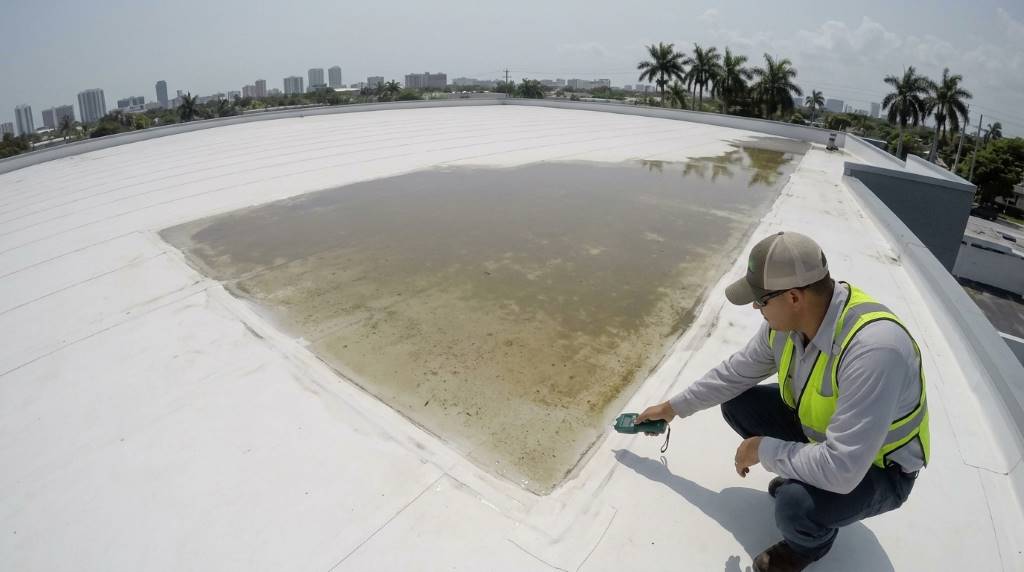
Stop roof ponding by correcting drainage, restoring proper slope, clearing drains, and repairing low areas before water causes deeper damage. Miami roofs face intense rainfall, with the area receiving roughly 62 inches annually and one inch of water weighing about 5.2 pounds per square foot. Therefore, even shallow standing water deserves prompt attention, especially across modern flat roof designs.
Key Takeaways
- Inspect roof drains, scuppers, gutters, and downspouts before repairing surface defects.
- Remove debris regularly because blocked drainage often causes avoidable ponding.
- Correct persistent low spots instead of repeatedly patching their surface.
- Use compatible roofing materials designed for Florida’s heat, rain, and humidity.
- Improve drainage slope when the roof structure allows a permanent correction.
- Hire a qualified roofing professional when ponding lasts beyond normal rainfall.
Start With the Real Cause of Roof Ponding
Roof ponding occurs when water remains on a roof after rainfall instead of draining away. First, identify why water collects before choosing any repair method.
Miami’s heavy storms can expose drainage weaknesses quickly, particularly on low-slope and flat roofing systems. Consequently, a minor drainage problem can become a recurring maintenance issue.
Begin by examining every area where water remains after the surrounding roof becomes dry. Mark those locations and note their approximate size, depth, and distance from drains.
Next, inspect nearby drains, scuppers, gutters, and downspouts for visible restrictions or damage. Also check whether surrounding surfaces direct water toward those drainage points.
Modern garage construction can also influence how roof and exterior drainage systems perform together. For broader renovation planning, explore these future proof garage trends before changing connected structures.
Why Flat Roofs Develop Low Spots
Flat roofs rarely sit completely level because they need controlled slopes for effective drainage. However, poor installation, structural movement, or aging materials can create unwanted depressions.
Roof membranes can also soften or deform after repeated heat exposure and prolonged moisture contact. Over time, these changes may create shallow areas that collect rainfall.
Heavy equipment, construction activity, and previous repairs can contribute to localized settlement. Therefore, inspect the entire drainage pattern instead of treating only visible water stains.
Clear and Upgrade the Roof Drainage System
Drainage represents the first practical defense against ponding because water needs an unobstructed path away. Start with roof drains before considering expensive structural corrections.
Remove leaves, dirt, branches, sediment, and other debris from every drain opening. Then inspect drain baskets, strainers, and surrounding membrane areas for damage.
Check scuppers for blockages and confirm that their openings remain completely unobstructed. Additionally, verify that downspouts discharge water away from walls, foundations, and other vulnerable areas.
Gutters need enough capacity to handle intense rainfall without overflowing onto the roof edge. Clean them regularly and repair sections that sag, separate, or hold standing water.
Drainage improvements should support the entire roofing system rather than create isolated fixes. When evaluating replacement materials, consider energy efficient roofing options that suit Miami’s demanding climate.
Simple Drainage Maintenance Schedule
Regular maintenance reduces the chance that small drainage problems will become expensive roof repairs. Create a schedule based on nearby trees, storm exposure, and roof conditions.
- After major storms: Remove visible debris and inspect drainage openings.
- Monthly: Check gutters, scuppers, downspouts, and roof drain areas.
- Before storm season: Inspect seals, flashing, membranes, and drainage components.
- After nearby construction: Remove dust, fragments, fasteners, and other roofing debris.
Do not assume clean drains guarantee adequate drainage across the entire roof. Water can still pond when the roof lacks sufficient slope.
Fix Low Spots Instead of Masking Them
Persistent ponding often points toward a low area that needs correction. Simply adding sealant usually treats the symptom without correcting the drainage problem.
Small depressions may sometimes accept compatible roofing materials or approved tapered solutions. However, the correct repair depends on membrane type, substrate condition, and ponding severity.
Never place random materials beneath a roof membrane to create slope. Improper fillers can damage the membrane, trap moisture, or create new stress points.
A roofing professional can determine whether tapered insulation, crickets, saddles, or localized rebuilding fits the roof. Each method redirects water toward existing drainage points without relying on repeated patching.
When replacing damaged roofing sections, consider the entire roof assembly rather than one visible defect. Advanced materials can sometimes improve durability, thermal performance, and moisture management together, as explained through advanced roofing materials.
When Tapered Insulation Makes Sense
Tapered insulation creates controlled slopes beneath compatible roofing membranes. It can redirect water without requiring major structural reconstruction.
This approach works especially well during roof replacement or substantial membrane rehabilitation. However, designers must account for existing drains, parapets, equipment, and available height.
Proper detailing remains essential around penetrations and drainage points. Otherwise, new slope work may solve one ponding area while creating another.
Improve Roof Slope and Drainage Design
Some ponding problems require more than cleaning and localized repairs. When water repeatedly collects across broad areas, evaluate the roof’s overall drainage design.
Positive drainage means water naturally moves toward approved drainage points without remaining trapped. Roofing professionals can assess slopes using measurements, levels, or suitable digital surveying equipment.
If the structure permits, additional tapered insulation can create more effective drainage paths. In severe cases, structural modifications may provide a more permanent solution.
Drain locations also matter because distant low points can remain wet despite functioning drains. A redesigned system should shorten water travel distances and eliminate isolated depressions.
Signs Your Roof Needs a Slope Correction
- Water remains several days after rainfall.
- The same locations repeatedly collect standing water.
- Drains work correctly but nearby areas remain wet.
- Roof surfaces show repeated membrane deterioration around ponding zones.
- Previous patches failed despite proper surface preparation.
These signs suggest a recurring drainage pattern rather than a simple maintenance issue. Therefore, investigate the underlying geometry before applying another surface patch.
Choose Roofing Materials for Miami’s Climate
Miami roofing systems face intense sunlight, high humidity, heavy rainfall, and rapid weather changes. Therefore, material selection should support both water resistance and long-term dimensional stability.
Single-ply membranes, modified bitumen, built-up systems, coatings, and other assemblies can serve different roofing applications. However, compatibility matters more than choosing a material based on popularity.
A new membrane cannot compensate for inadequate drainage beneath it. Always address slope, drains, substrate condition, and moisture problems before installation.
Reflective roofing surfaces can also reduce heat absorption and help manage rooftop temperatures. Nevertheless, energy performance should complement proper drainage rather than replace it.
What to Consider Before Re-Roofing
- Existing membrane type: Confirm compatibility with proposed materials.
- Roof slope: Identify every low point before installation.
- Drainage capacity: Verify drains can handle expected stormwater volume.
- Substrate condition: Replace damaged or moisture-compromised areas.
- Flashing details: Inspect walls, curbs, penetrations, and roof edges.
- Warranty requirements: Follow manufacturer installation specifications carefully.
These checks reduce the chance of installing a new roof over an unresolved drainage problem. Otherwise, the same ponding pattern may return after replacement.
Prevent Roof Ponding Through Routine Maintenance
Prevention costs less than repeated emergency repairs, especially when small drainage issues receive prompt attention. Establish a practical inspection routine instead of waiting for visible leaks.
Keep rooftop drains clear throughout the year, especially after severe storms and nearby landscaping work. Remove debris carefully without damaging membranes or protective surfaces.
Inspect flashing, seams, penetrations, and membrane edges for cracking, lifting, or separation. Small defects can allow water beneath roofing materials and accelerate deterioration.
Also monitor interior ceilings and upper walls for new stains or discoloration. Those signs can indicate moisture intrusion even when the roof surface looks intact.
Miami Roof Ponding Prevention Checklist
- Inspect drainage points after heavy rainfall.
- Keep gutters and scuppers free from debris.
- Document recurring ponding locations with photographs.
- Check visible membrane seams and flashing.
- Schedule professional inspections when problems repeat.
- Address damaged drainage components without unnecessary delay.
Photographs create a useful record when comparing roof conditions over time. They can also help contractors identify recurring areas before inspections.
Know When Professional Roof Repair Makes Sense
Some ponding problems require professional evaluation because the visible water represents a deeper structural or installation issue. Persistent ponding deserves particular attention when leaks or membrane damage appear.
Call a qualified roofing professional when water remains after normal drying periods or repeatedly returns. Also seek professional help when you notice sagging, blistering, membrane separation, or interior water damage.
Professionals can inspect concealed conditions that homeowners cannot safely evaluate. They can also determine whether drainage repairs, slope correction, membrane replacement, or structural work offers the best solution.
Ask for a written assessment that identifies the ponding cause and proposed corrective work. A clear scope helps prevent unnecessary repairs and makes competing estimates easier to compare.
Questions to Ask a Roofing Contractor
- What specifically causes the ponding on my roof?
- Can improved drainage solve the problem permanently?
- Does the roof require additional slope?
- Is moisture trapped beneath the existing membrane?
- Which materials match the current roofing system?
- How will the proposed repair prevent recurring ponding?
Good contractors should explain the drainage strategy rather than simply recommend another coating or patch. Their solution should address both water movement and roof durability.
Common Mistakes That Make Ponding Worse
Many homeowners focus on visible water without investigating the drainage system beneath the problem. That approach can produce temporary improvements but rarely provides lasting results.
Applying Coating Over Standing Water
Roof coatings require suitable surfaces and proper preparation before application. Coating over moisture can trap water and undermine adhesion.
Always determine whether the substrate contains moisture before applying a protective coating. Correct drainage problems first, then prepare the surface according to manufacturer requirements.
Adding Unapproved Fill Materials
Improvised fillers can create uneven pressure and interfere with membrane movement. They may also introduce compatibility problems with existing roofing materials.
Use professionally specified materials designed for the particular roofing assembly. Proper detailing provides a more reliable solution than improvised slope correction.
Ignoring Small Leaks
A small leak can indicate broader membrane deterioration around a ponding area. Therefore, do not treat interior staining as an isolated cosmetic issue.
Investigate the surrounding roof surface and drainage pattern before completing interior repairs. Otherwise, moisture can continue entering the building after the stain disappears.
How Long Should Roof Ponding Last?
Brief surface moisture after heavy rain does not always indicate a serious drainage defect. However, water that repeatedly remains for extended periods deserves professional evaluation.
Drying time depends on rainfall intensity, sunlight, wind, roof exposure, drainage design, and local conditions. Therefore, homeowners should watch recurring patterns rather than rely on one observation.
Persistent ponding becomes more concerning when it appears after ordinary rainfall or occupies the same low spots. Repeated exposure can increase membrane stress and accelerate deterioration.
Frequently Asked Questions
How do I stop roof ponding permanently?
Correct drainage, eliminate low spots, repair damaged areas, and improve roof slope when necessary.
Is roof ponding normal after heavy rain?
Temporary moisture can occur, but recurring standing water indicates a drainage or slope problem.
Can I fix roof ponding myself?
You can clear accessible debris, but persistent ponding usually requires professional roof assessment.
Does roof coating stop ponding?
Roof coating protects suitable surfaces but cannot correct inadequate slope or blocked drainage.
When should I replace a ponding roof?
Replacement makes sense when widespread deterioration prevents reliable repairs from restoring drainage and waterproofing.
Final Thoughts
Stopping roof ponding starts with drainage, but lasting results require understanding why water collects. Clean drains, correct low spots, improve slope, and select compatible materials for Miami’s climate.
Do not wait for repeated leaks before investigating standing water. Contact a qualified roofing professional for an inspection and request a drainage-focused repair plan before damage expands.
Schedule a professional roof inspection today if ponding keeps returning after rainfall. Early correction can protect your roofing system, interior spaces, and long-term repair budget.