

Waking up with a stiff neck is not a great way to start the day. For stomach sleepers, this is often a regular experience. The position itself puts pressure on the spine and forces the neck to turn sideways for hours at a time. However, the right pillow can make a surprising difference. A thin pillow, in particular, is one of the simplest tools to help stomach sleepers feel better in the morning.
This article explains why stomach sleeping causes discomfort, how pillow thickness affects the neck, and what to look for when choosing the right thin pillow for a more comfortable night.
Why Stomach Sleeping Is Hard on the Neck
Sleeping on your stomach is one of the most common sleep positions. Many people find it comfortable and even calming. However, it comes with a clear downside. When you lie face down, your neck twists to one side so you can breathe. This twist is held for several hours throughout the night.
Over time, this repeated strain leads to neck pain while sleeping and carries into the morning. The muscles along the neck and shoulders tighten. The joints feel compressed. Some people also experience tingling in their arms or headaches when they wake up.
Additionally, the lower back takes on extra pressure in this position. The belly pushes into the mattress, which can cause the spine to arch unnaturally. This is why stomach sleeping is often considered the hardest position to maintain without some discomfort.
The Role of Pillow Thickness in Neck Health
Pillow thickness, also called loft, plays a major role in how your neck is positioned during sleep. A thick pillow pushes the head upward. For back or side sleepers, this can be helpful. For stomach sleepers, however, it creates a sharp angle between the head and the mattress.
Think of it this way. If your head is lifted too high while your body is flat on the mattress, your neck bends backward and sideways at the same time. This double strain is a key reason why neck pain while sleeping is so common among stomach sleepers who use standard pillows.
A thin pillow keeps the head much closer to the mattress surface. Therefore, the angle of the neck stays gentler and more natural. The muscles do not have to work as hard to hold the head in place. This small change can reduce tension significantly over a full night of sleep.
How Thin Pillows Support Spinal Alignment
Spinal alignment refers to the natural, neutral curve of the spine from the neck down to the lower back. When the spine is aligned, the muscles and joints are under less stress. Sleep becomes more restorative and less damaging to the body.
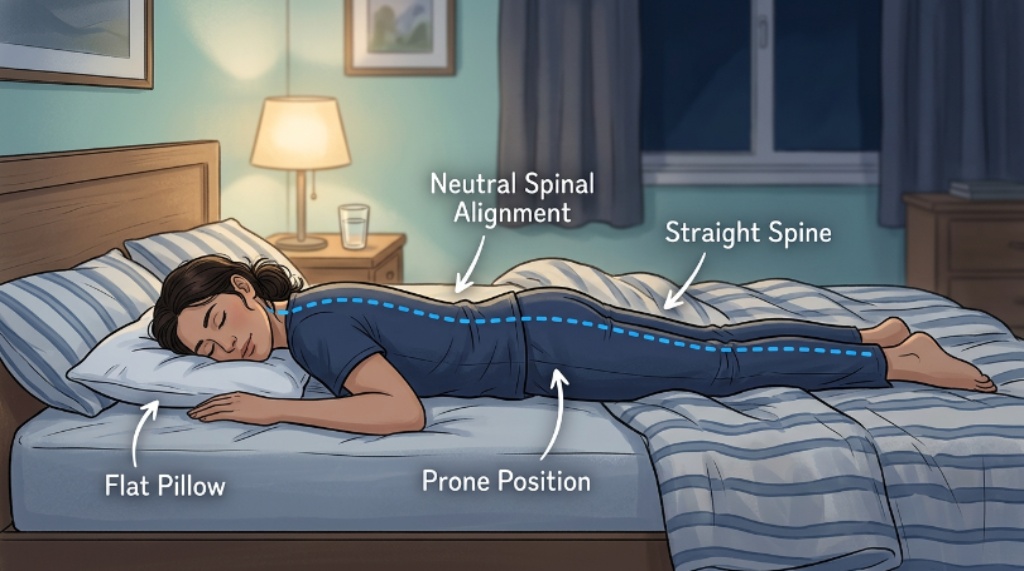
For stomach sleepers, achieving good spinal alignment is tricky but not impossible. A thin pillow helps by lowering the elevation of the head. When the head sits closer to the level of the mattress, the cervical spine (the neck area) does not have to tilt upward. This keeps the top of the spine more in line with the rest of the back.
Some sleep experts also suggest pairing a thin head pillow with a flat pillow placed under the pelvis. Together, these two adjustments help maintain a more level spinal alignment from head to hip. The result is less strain on the entire back, not just the neck.
What Makes a Good Thin Pillow for Stomach Sleepers
Not every flat pillow works equally well. There are a few key qualities to look for when choosing the right thin pillow for stomach sleeping.
Loft height matters most. A pillow with a loft between 2 and 3 inches is generally ideal for stomach sleepers. Anything higher tends to lift the head too much. Anything lower may not offer enough cushioning for comfort.
The fill material also plays a role. Here are some common options and how they perform:
- Memory foam (low profile): Conforms to the shape of the head and neck. Offers firm, consistent support without shifting.
- Buckwheat (thin fill): Adjustable and breathable. Can be molded to the exact thickness you prefer.
- Down or down alternative: Soft and light. Easy to compress, which helps stomach sleepers flatten the pillow as needed.
- Latex (thin): Durable and responsive. Provides gentle support without sinking too deeply.
Breathability is another factor worth considering. Stomach sleepers often place their face close to or directly on the pillow. A pillow with good airflow prevents heat buildup and keeps sleep cooler and more comfortable.
Finally, look at the cover material. A soft, smooth cover reduces friction against the face and skin. This is especially important for people with sensitive skin or those who tend to shift positions during the night.
Building Habits for Healthy Sleep as a Stomach Sleeper
Choosing the right pillow is a great first step. However, a few other habits can also support healthy sleep for stomach sleepers.
Placing a firm, flat pillow under the hips takes pressure off the lower back. This small adjustment helps balance the body on the mattress. Additionally, some stomach sleepers find relief by slightly angling their body, rather than lying completely flat. A small shift can reduce how far the neck has to rotate.
Stretching before bed also helps. Gentle neck rolls and shoulder stretches release tension that has built up during the day. This prepares the muscles for rest and reduces the chance of waking up stiff.
Staying consistent with sleep position is also useful. If stomach sleeping is deeply ingrained, transitioning fully to a new position can be very difficult. Therefore, focusing on improving the current position is often more practical than trying to change it overnight.
It is also worth investing in a mattress with enough firmness to support the body without letting it sink too deeply. A mattress that is too soft can make spinal alignment harder to achieve, regardless of how good your pillow is.
When to See a Professional
Sometimes pillow changes and sleep habit adjustments are not enough. If neck pain persists for several weeks, or if it comes with other symptoms like numbness, weakness, or sharp pain down the arm, it is a good idea to see a doctor or physical therapist.
A healthcare professional can assess whether there is an underlying condition contributing to the discomfort. They may also recommend specific stretches, postural corrections, or other treatments that go beyond pillow selection.
Conclusion
Stomach sleeping does not have to mean waking up in pain every morning. The right thin pillow can make a meaningful difference by keeping the neck at a gentler angle and supporting better spinal alignment throughout the night. Choosing a pillow with the right loft height and fill material is a simple and affordable step toward healthy sleep. Combined with a few good habits like stretching, using a hip pillow, and picking a supportive mattress, stomach sleepers can significantly reduce their morning discomfort and wake up feeling more rested.
Frequently Asked Questions
What pillow thickness is best for stomach sleepers?
A pillow with a loft of 2 to 3 inches is generally recommended for stomach sleepers. This height keeps the head close to the mattress level, reducing strain on the neck and supporting a more neutral spine position.
Can sleeping without a pillow help stomach sleepers?
Some stomach sleepers do find relief by going completely pillow-free. Without any pillow, the neck does not tilt upward at all. However, this does not work for everyone. A very thin pillow often offers a comfortable middle ground between full elevation and no support at all.
Is stomach sleeping bad for you in the long term?
Stomach sleeping can contribute to ongoing neck and lower back discomfort if no adjustments are made. However, using a thin pillow, placing support under the hips, and maintaining good mattress firmness can reduce most of the negative effects over time.
How do I stop waking up with a stiff neck as a stomach sleeper?
Start by switching to a thin, low-loft pillow. Add a flat pillow under your pelvis to level out the spine. Stretch your neck and shoulders before bed. If the stiffness continues, consult a physical therapist for personalized guidance.
Are memory foam thin pillows good for stomach sleepers?
Yes, low-profile memory foam pillows can work well for stomach sleepers. They conform to the shape of the head and neck, provide consistent support, and do not shift during the night. Just make sure the loft is 2 to 3 inches or less.