
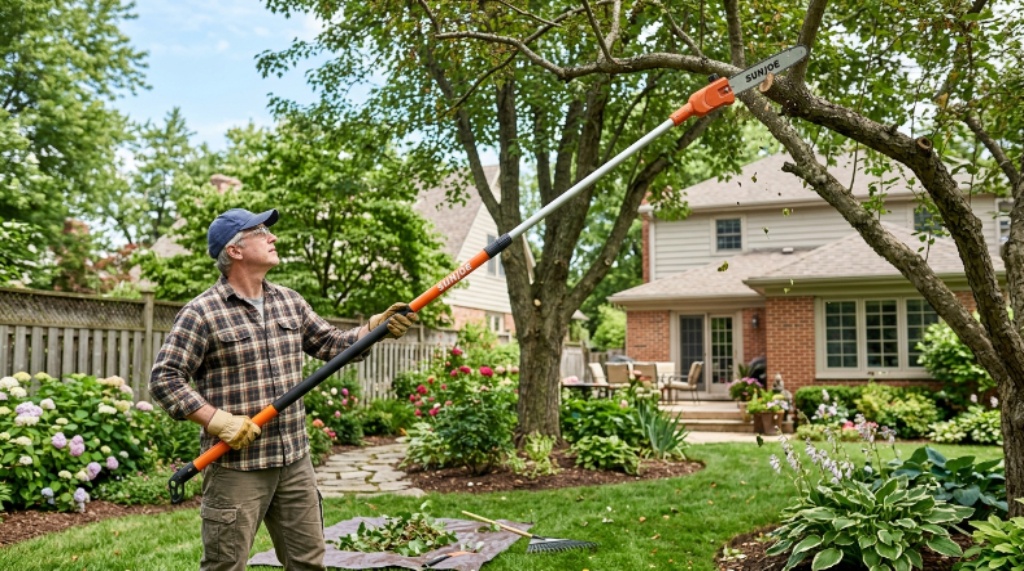
Trimming tall branches used to mean hiring someone or balancing on a ladder. A pole saw changes all of that. It puts the cutting power of a chainsaw on an extendable pole, letting you reach high limbs safely from the ground. The problem is that prices vary wildly. Some models cost hundreds of dollars, while others sit well under a hundred.
The good news is that spending less does not always mean getting less. Many affordable pole saws deliver solid performance for everyday garden tasks. The key is knowing what to look for before you buy.
This guide walks you through everything you need to consider. By the end, you will be ready to find a pole saw that fits your budget and handles the job properly.
What a Pole Saw Actually Does and Who Needs One
A pole saw is a cutting tool mounted at the end of a long, extendable shaft. It allows you to cut branches that are out of reach without climbing. Most home models can reach between three and five metres, which covers the majority of domestic pruning tasks.
Homeowners with fruit trees, garden hedges, or large shade trees benefit most from owning one. Additionally, people who manage rural properties or small orchards find them invaluable for routine maintenance. If you regularly hire a tree service for basic pruning, a pole saw pays for itself quickly.
However, pole saws are not designed for heavy felling or thick trunk work. They are precision tools for branches, typically up to 20 centimetres in diameter for powered models and slightly less for manual ones.
The Three Main Types of Pole Saws
Understanding the different types helps you narrow your options before comparing prices. Each type suits a different kind of user and workload.
Manual Pole Saws
Manual pole saws use a hand-powered pruning blade attached to an extendable pole. They require physical effort but produce no noise and need no power source. They are the cheapest option available and work well for light, occasional pruning. If you only need to trim a few branches a few times a year, a manual model may be all you need.
Electric Pole Saws
Corded electric pole saws plug into a standard power outlet. They deliver consistent power without the need for batteries or fuel. However, the cord limits how far you can move from a power source. They tend to be lighter than battery models and are often more affordable at equivalent performance levels. They suit homeowners with manageable garden sizes and access to outdoor power points.
Battery-Powered Pole Saws
Cordless battery-powered models offer the most flexibility. You can move freely without worrying about a cord. The trade-off is battery life and weight. Higher-voltage batteries last longer but add weight to the tool. Therefore, when comparing cordless models, always check the battery voltage and the estimated run time per charge. For larger gardens or more frequent use, a cordless model is worth the extra investment.
Key Features to Look for in an Affordable Pole Saw
Shopping for an affordable pole saw requires knowing which features are worth paying for and which ones are just marketing language.
Bar Length and Chain Quality
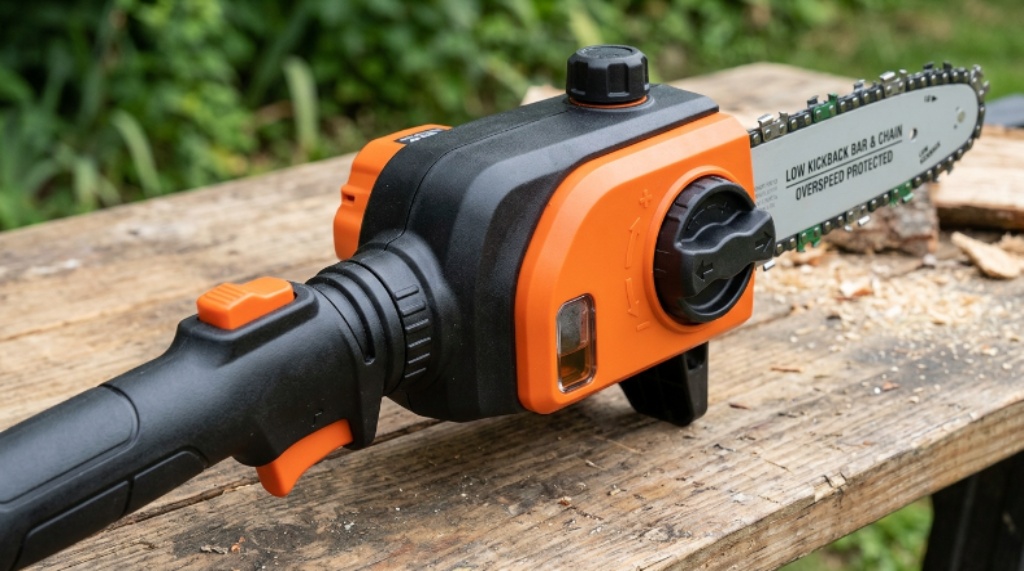
The bar is the cutting attachment at the top of the pole. Most home-use models come with a bar between 20 and 25 centimetres. A longer bar cuts thicker branches in fewer passes. However, a longer bar also adds weight, which matters when the tool is extended to full length.
Chain quality is equally important. A dull or low-grade chain makes cutting harder and wears out faster. Look for models that use standard Oregon-compatible chains, as replacements are widely available and affordable. Avoid models with proprietary chains that are difficult to source or expensive to replace.
Reach and Extension Mechanism
More reach means more versatility. Most pole saws offer a reach between 2.5 and 5 metres when the user’s arm height is factored in. The extension mechanism should lock securely without slipping under load. Twist-lock and button-lock systems are the most common. Test the mechanism if possible, or read customer reviews to confirm it holds firmly during use.
Weight and Balance
A heavy pole saw becomes exhausting to use quickly. This is especially true when the pole is extended to its full length, as the weight is amplified by the leverage. Look for models under five kilograms for comfortable use. Additionally, a well-balanced tool distributes weight evenly, reducing arm fatigue during longer sessions.
Safety Features
A chain brake is a critical safety feature. It stops the chain instantly if the saw kicks back unexpectedly. Not all budget models include this, but it is worth prioritising. A handguard, secure pole locking, and a low-kickback chain design are also worth checking before you buy.
Where to Find Quality Cheap Pruning Tools
Finding cheap pruning tools that actually perform requires looking in the right places. Price alone is never a reliable indicator of value.
Online Retailers and Marketplaces
Websites like Amazon, eBay, and tool-specific retailers offer a wide range of pole saws at competitive prices. Customer reviews are invaluable here. Look for products with a large number of verified reviews and consistent feedback on durability, ease of use, and customer support. Sort by highest-rated rather than lowest price to filter out the poorest options.
Hardware and Home Improvement Stores
Physical stores let you hold the tool before buying. This is helpful for assessing weight and build quality, which can be difficult to judge from photos alone. Additionally, staff at specialist tool stores can offer practical advice based on your specific needs.
End-of-Season Sales and Clearance Offers
Garden tools often go on sale at the end of summer or autumn when demand drops. Buying at this time can save you 20 to 40 percent on the regular retail price. Similarly, new model releases push older versions into clearance, which can mean excellent tools at reduced prices.
Second-Hand Tools
Pre-owned pole saws from reputable brands can offer outstanding value. Check local classified listings, garage sales, or platforms like Facebook Marketplace. Many homeowners sell lightly used tools when they upgrade or no longer need them. Therefore, buying second-hand from a known brand often beats buying new from an unknown one.
Red Flags to Avoid When Buying Budget Pole Saws
Not every affordable option is a good deal. Some cheap models create more problems than they solve.
Avoid tools with no listed bar length or chain specification. Transparent brands publish these figures clearly. Also be cautious of models with only a handful of reviews or suspiciously perfect ratings, as these may not reflect genuine buyer experiences.
Plastic components in high-stress areas are another warning sign. The pole joint, the bar mount, and the trigger housing take the most abuse. These parts should be reinforced or metal wherever possible. A tool that feels flimsy in the hand usually behaves the same way in the garden.
Finally, check the warranty. A reputable brand offers at least a one-year warranty on their tools. A model with no warranty or a warranty that excludes normal wear is a risk not worth taking, regardless of the price.
Maintenance Tips to Extend the Life of Your Pole Saw
Even the best affordable pole saw will underperform without basic maintenance. A little care goes a long way.
Keep the chain sharp. A sharp chain cuts cleanly and puts less strain on the motor or your arms. Most chains can be sharpened at home with an inexpensive round file, or professionally sharpened for a small fee. Additionally, oil the chain regularly to reduce friction and prevent premature wear. Most electric and battery models have an automatic oiler, but it is worth checking the reservoir before each session.
After each use, wipe down the bar and chain, clear any debris from the mechanism, and store the tool in a dry location. For battery models, avoid leaving the battery fully discharged for extended periods, as this can shorten its overall lifespan.
These simple steps keep your tool working reliably for years, making your initial investment go even further.
Conclusion
Finding a budget-friendly pole saw without sacrificing quality is completely achievable. Start by identifying which type suits your needs — manual, corded electric, or cordless battery-powered. Then focus on the features that matter most: bar length, chain quality, reach, weight, and safety mechanisms.
Shop wisely by comparing customer reviews, taking advantage of seasonal sales, and considering reputable second-hand options. Avoid models with vague specifications, poor build quality, or no warranty. And once you have your tool, maintain it regularly to protect your investment.
A good affordable pole saw makes garden maintenance safer, faster, and far more satisfying. With the right knowledge, you do not have to choose between saving money and getting the job done properly.
Frequently Asked Questions
What is a safe reach for a home-use pole saw?
Most home users need a reach of three to four metres. This covers the majority of domestic trees and garden shrubs. Some models extend further, but beyond five metres the tool becomes difficult to control and the vibration increases significantly.
How much should I expect to spend on a quality budget pole saw?
A reliable corded electric model starts from around $60 to $100. Battery-powered models with decent run time typically start from $100 to $150. Manual models are available from $30 upward. Spending at the upper end of each category usually means significantly better build quality and longevity.
Are battery-powered pole saws powerful enough for thick branches?
Modern 40-volt and 56-volt cordless models handle branches up to 20 centimetres in diameter with ease. However, lower-voltage models may struggle with very dense hardwoods. Always check the manufacturer’s maximum cutting diameter before purchasing.
How often should I sharpen the chain on a pole saw?
For occasional home use, sharpening after every five to ten hours of cutting is a reasonable guideline. If you notice the saw pushing rather than cutting, or producing fine sawdust instead of chips, the chain needs sharpening regardless of hours used.
Can I use a pole saw safely on my own?
Yes, with proper precautions. Always wear a helmet, eye protection, and gloves. Never cut directly overhead. Position yourself to the side of the branch so any falling debris does not land on you. Read the manufacturer’s safety guide before your first use, and never operate the tool from a ladder.