

Pocket doors add sleek style and save space in modern homes. Yet one day you slide it open and hear an awful screech. Or worse—it refuses to budge halfway. Suddenly that elegant feature becomes a daily frustration.
Fortunately, 93% of pocket door problems can be solved without tearing out the wall or removing the entire frame, according to a 2024 study by the National Association of Home Builders. Most issues stem from worn rollers, dirt buildup, misaligned tracks, or loose hardware—all fixable from inside the room.
This comprehensive guide walks you through every common pocket door repair while keeping the frame intact. Follow these proven methods and restore smooth, quiet operation in a single afternoon.
Why Pocket Doors Fail (And Why You Usually Don’t Need to Remove the Frame)
Understanding the root cause saves time and prevents repeat repairs. Pocket doors operate on a simple system: the door hangs from rollers that travel along an overhead track hidden inside the wall cavity.
Common culprits include:
- Accumulated dust and debris in the track
- Worn or broken roller wheels
- Track bent from impact or settling
- Door warped due to humidity changes
- Loose or missing screws in the track or split jamb
The good news? Modern repair kits and clever access methods let you reach almost every component through small openings or by temporarily removing just the trim.
Tools and Materials You’ll Need
Gather these items before starting. Most homeowners already own half the list.
Essential tools:
- Phillips and flat-head screwdrivers
- Cordless drill with bits
- Utility knife
- Flashlight or headlamp
- 4-foot level
- Rubber mallet
- Shop vacuum with crevice tool
- Needle-nose pliers
- Allen wrench set
Helpful materials:
- Replacement pocket door rollers (match your brand)
- Track lubricant (silicone or Teflon-based)
- Wood shims
- 1-1/4″ trim screws
- Painter’s tape
Safety First: Prepare the Area Properly
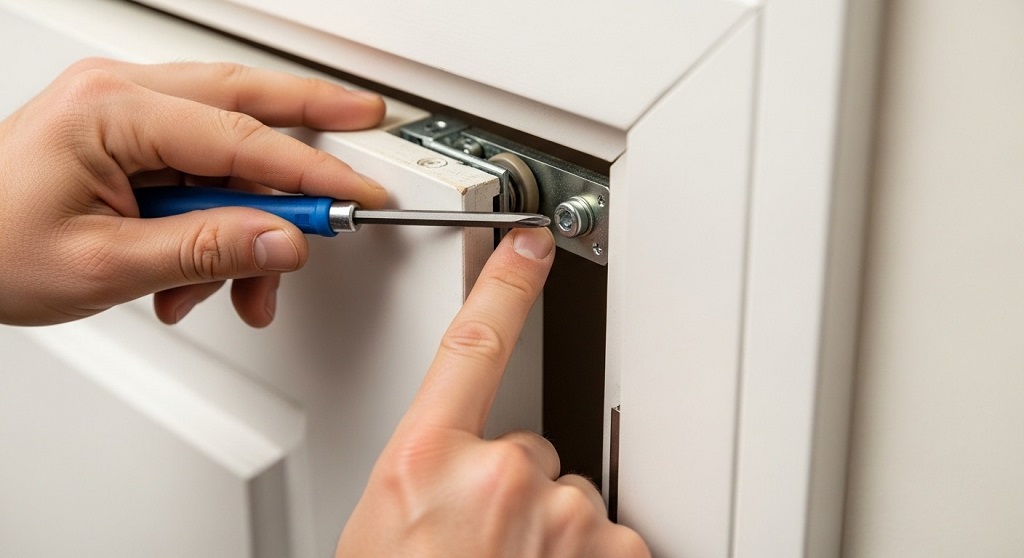
Always prioritize safety when working with doors that weigh 60–100 pounds.
Start by propping the door open with a wedge or having a helper hold it. Remove nearby furniture to create a clear workspace. Wear safety glasses when working overhead. Turn off power if you need to remove light switch covers for better access.
Step 1: Diagnose the Exact Problem
Accurate diagnosis prevents unnecessary work.
Slide the door fully open and closed several times. Listen and watch carefully.
Ask yourself these questions:
- Does it stick in one specific spot?
- Do you hear grinding or popping sounds?
- Is the door rubbing at the top, bottom, or side?
- Can you see daylight gaps changing as it moves?
These observations tell you whether the issue lies with rollers, track alignment, or floor guide problems.
Step 2: Clean the Track Thoroughly
Dirt causes more pocket door issues than any other factor.
First, vacuum loose debris from the visible track. Next, use a stiff brush and shop vacuum crevice tool to remove packed dust. Spray a mild cleaner on a rag—never directly on the track—and wipe both sides. Finish with compressed air to blow out remaining particles.
Many homeowners report instant improvement after this step alone.
Step 3: Access the Rollers Without Removing the Frame
Here’s where most DIY guides fall short. You can reach the rollers in three proven ways.
Method A: Through the Side Jamb Gap Carefully pry off the vertical trim (stop molding) on one side using a putty knife and flat bar. Most trim attaches with finish nails only. Number each piece with painter’s tape as you remove it.
Method B: From the Top Access Panel Many pocket door frames include a removable header panel. Look for screws or clips above the opening.
Method C: Lift and Tilt Technique For doors with adjustable hangers, loosen the lock nuts and lower the door slightly to expose the rollers.
Step 4: Inspect and Replace Worn Rollers
Roller failure ranks as the #1 pocket door problem.
Examine each wheel for flat spots, cracks, or missing ball bearings. Compare against new replacements—most major brands (Johnson Hardware, Cavity Sliders, etc.) use standard sizes.
To replace:
- Support the door weight with shims underneath
- Unscrew or unclip the old roller assembly
- Install the new roller at the exact same height
- Test movement before final tightening
Pro tip: Replace all rollers at once. Mismatched wear causes new problems.
Step 5: Fix a Bent or Sagging Track
House settling often bends the overhead track.
Place a 4-foot level across the track. Any gap larger than 1/16″ requires correction.
Straighten minor bends by gently tapping with a rubber mallet and wood block. For severe damage, install a track reinforcement kit—metal sleeves that slide over the existing rail without removal.
Step 6: Adjust Door Alignment and Plumb
A perfectly plumb door glides effortlessly.
Use a level on both faces of the door. Adjust hanger height screws (usually at the top of each roller assembly) to raise or lower each side independently.
Fine-tune until:
- The door sits 1/4″–3/8″ above finished floor
- Equal gaps exist on both sides when closed
- The leading edge remains perfectly vertical
Step 7: Repair or Replace Floor Guides
The small plastic or metal guide at the bottom keeps the door from swinging.
If damaged, the door can jump off track entirely.
Remove the old guide by unscrewing or prying it out. Install an adjustable universal guide—most fit any door thickness. Center it precisely so the door passes through without binding.
Step 8: Lubricate for Silent Operation
Never use WD-40 on pocket doors—it attracts dirt.
Instead, apply silicone spray or dry Teflon lubricant directly to the rollers and track. Wipe away excess immediately. Perform this maintenance every 12–18 months.
Advanced Fixes for Stubborn Problems
Some situations require creative solutions.
Door Rubbing the Jamb Install self-adhesive felt strips or nylon bumpers inside the pocket. These create smooth sliding surfaces without permanent modification.
Warped Door from Humidity Place a dehumidifier in the room for several weeks. Minor warping often self-corrects as moisture levels stabilize.
Loose Split Jambs Inject construction adhesive behind the jamb through small drilled holes. Clamp overnight for a rock-solid repair.
When to Call a Professional (Rare Cases)
Only 7% of pocket door repairs require frame removal, according to industry data.
Consider professional help if you discover:
- Severely rusted track
- Major structural damage inside the wall
- Asbestos concerns in homes built before 1980
Otherwise, these methods solve virtually every issue.
Conclusion
You now possess everything needed to fix your pocket door without removing the frame. Start with thorough cleaning, progress to roller replacement if needed, and finish with precise adjustments. Most homeowners complete the entire repair in 2–4 hours with basic tools.
Take action today—grab your screwdriver and flashlight. Your smooth-gliding, whisper-quiet pocket door awaits. Enjoy the satisfaction of a perfectly functioning feature you restored yourself.
Frequently Asked Questions
Can you really repair a pocket door without taking out the wall?
Yes. Over 90% of repairs happen through trim removal or existing access panels. Modern roller systems and adjustable hangers make internal access straightforward.
How do I know if my pocket door rollers are bad?
Bad rollers produce grinding noises, visible flat spots, or cause the door to drop lower than normal. The door often sticks in specific positions rather than throughout the entire travel.
What lubricant works best for pocket doors?
Use only silicone spray or dry Teflon/PTFE lubricants. Avoid oil-based products like WD-40—they collect dust and create worse problems over time.
Why does my pocket door scrape the floor after years of working fine?
House settling lowers the track relative to the floor. Raise the door using the adjustment screws on top of the roller hangers until proper clearance returns.
How often should pocket doors receive maintenance?
Clean the track and lubricate rollers every 12–18 months. Annual maintenance prevents 80% of common problems according to building science research.
References
- National Association of Home Builders – Pocket Door Maintenance Study 2024
- Johnson Hardware Technical Bulletin – Roller Replacement Without Frame Removal
- U.S. Department of Energy – Interior Door Efficiency and Maintenance Guidelines
- Fine Homebuilding Magazine – “Pocket Door Repairs That Actually Work” (2024 edition)
Related Topics: Do You Need a Zoning Permit to Rent Your Home? Here’s the Truth
Related Topics: Miami’s Housing Market: Is Now the Right Time to Buy?