

Imagine stepping into your shower on a freezing Calgary morning at -30°C, expecting steaming hot water only to feel an icy blast. That moment instantly ruins your day. In Calgary homes, a failing water heater creates more than inconvenience; it disrupts daily life completely.
According to Natural Resources Canada, water heating accounts for about 19% of total home energy use. Additionally, the average lifespan of a conventional tank water heater ranges from 8 to 12 years, as reported by the U.S. Department of Energy. When your unit approaches or exceeds this age, problems often begin. Recognizing early warning signs helps you decide whether to repair or replace your hot water system before a complete breakdown occurs.
Why Calgary’s Climate Makes Water Heater Issues Worse
Calgary experiences extreme temperature swings from -40°C winters to +35°C summers. These conditions stress water heaters significantly. Hard water, common in the region with high mineral content, accelerates sediment buildup inside tanks. Consequently, efficiency drops and components wear out faster.
Cold incoming water in winter forces your heater to work harder. Therefore, any existing weakness becomes noticeable quickly during peak demand seasons.
10 Clear Signs Your Water Heater Needs Attention
No Hot Water or Insufficient Hot Water
You turn on the tap and wait—nothing warm arrives. Alternatively, hot water runs out after just one shower. This classic symptom usually indicates a failed heating element, broken thermostat, or heavy sediment blocking heat transfer.
Strange Noises Coming from the Tank
Popping, rumbling, or banging sounds signal trouble. Minerals settle at the tank bottom and harden over time. When water trapped beneath this layer turns to steam, it creates those alarming noises. Moreover, the tank lining may start cracking.
Discolored or Rusty Water
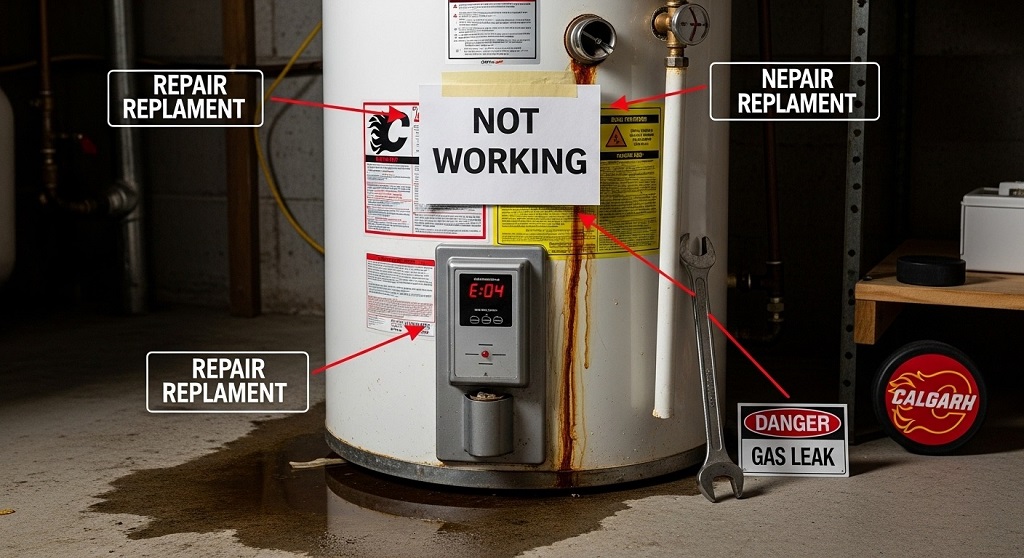
Brown, reddish, or yellowish water flowing from hot taps points to internal corrosion. Once rust appears, the tank deteriorially weakens. In addition, rusty water can stain fixtures and laundry permanently.
Leaks Around the Base of the Heater
Even small puddles near your water heater demand immediate attention. Common sources include loose valves, corroded tanks, or failing pressure relief valves. Furthermore, leaks worsen quickly in cold Calgary garages or basements.
Fluctuating Water Temperature
Your shower suddenly turns scalding hot, then ice cold. Faulty dip tubes, malfunctioning thermostats, or crossed hot-cold connections often cause this frustrating issue.
Visible Corrosion on the Tank or Fittings
Inspect your unit carefully. Green or orange corrosion on pipes, valves, or the tank itself reveals advancing deterioration. Once corrosion starts, it rarely stops without full replacement.
Age of Your Water Heater
Check the manufacturing date on the rating plate. Most conventional tanks last 8–12 years. Tankless units often reach 20 years with proper maintenance. However, if your Calgary water heater exceeds its expected lifespan, prepare for potential failure.
Higher Than Normal Energy Bills
A sudden spike in gas or electricity costs frequently stems from an inefficient heater. Sediment forces the unit to work longer to achieve the same temperature. As a result, monthly bills climb steadily.
Frequent Need for Repairs
You call a plumber every few months for the same issues. At this point, ongoing repairs cost more than a new, efficient model. Additionally, older parts become harder to source.
Foul Odors from Hot Water
Rotten egg smells usually indicate bacteria reacting with the anode rod. While replacing the rod sometimes solves the problem, persistent odors in older tanks suggest deeper corrosion issues.
Repair vs Replace: How to Decide
When Repair Makes Sense
- The unit remains under 8 years old
- Only one major component fails (such as the heating element or thermostat)
- No visible tank corrosion exists
- Sediment flushing resolves performance issues
Professional technicians can often restore reliable operation quickly in these cases.
When Replacement Becomes the Better Choice
- Age exceeds 10–12 years for tank models
- Multiple symptoms appear simultaneously
- Tank shows rust or leaks
- Energy efficiency has dropped dramatically
- You want to upgrade to a tankless or heat pump model
Modern water heaters operate 20–50% more efficiently than older units. Consequently, many Calgary homeowners recover the investment through lower utility bills.
Types of Water Heaters Available in Calgary Today
Conventional Storage Tank Heaters
These familiar units remain the most common choice. They store 40–80 gallons of hot water and come in gas or electric versions.
Tankless (On-Demand) Water Heaters
These compact units heat water only when needed. They provide endless hot water and save significant energy—especially valuable for larger families.
Heat Pump (Hybrid) Water Heaters
These innovative systems extract heat from surrounding air. They deliver exceptional efficiency in Calgary homes with adequate space and moderate basement temperatures.
Condensing Gas Water Heaters
These models capture exhaust heat that normally escapes. They achieve higher efficiency ratings than traditional gas tanks.
Solar Water Heating Systems
Although upfront investment runs higher, solar systems dramatically reduce long-term costs in sunny southern Alberta.
Steps to Take When Your Hot Water Stops Working
- Check the pilot light (gas models) or circuit breaker (electric models) first
- Verify the thermostat setting reaches at least 120°F (49°C)
- Listen for unusual noises and inspect for leaks
- Examine water color and temperature consistency
- Locate the serial number and determine the unit’s exact age
- Contact a licensed Calgary plumber for professional diagnosis
Never attempt gas line repairs yourself. Always prioritize safety.
Preventing Future Water Heater Problems
Regular maintenance extends equipment life significantly. Consider these proactive steps:
- Flush the tank annually to remove sediment
- Test the pressure relief valve yearly
- Inspect and replace anode rods every 3–5 years
- Install a water softener if your home has hard water
- Insulate older tanks and exposed hot water pipes
- Schedule professional maintenance tune-ups
These simple actions prevent most common failures.
Emergency Tips While Waiting for Professional Help
- Turn off the water supply to prevent flooding
- Shut off power (electric) or gas supply for safety
- Drain the tank partially if you notice major leaks
- Use your electric kettle or stovetop for essential hot water needs
- Inform household members to conserve remaining hot water
Quick action minimizes water damage and discomfort.
Related Topics: Fire Suppression Requirements for a Food Truck Kitchen
Conclusion
A malfunctioning water heater in Calgary creates real hardship during our harsh winters. However, recognizing warning signs early empowers you to make smart decisions. Whether you choose professional repair or invest in a modern replacement, acting promptly restores comfort and prevents costly emergencies.
Don’t wait for complete failure. If you notice any of these 10 signs—no hot water, strange noises, leaks, or rising energy bills—contact a licensed Calgary plumbing professional today for expert assessment and reliable solutions.
Related Topics: Prevent Drain Gnats in Kitchen Sink
FAQs
Why does my water heater make loud banging noises in Calgary?
Hard water minerals settle and trap steam bubbles. When bubbles collapse, they create banging sounds. Annual flushing usually resolves this issue.
How long do water heaters typically last in Calgary homes?
Conventional tank models last 8–12 years on average. Tankless units often exceed 20 years with proper maintenance.
Is it safe to have rusty water coming from my hot taps?
No. Rusty water indicates internal tank corrosion. Continued use risks sudden tank failure and potential flooding.
Should I repair or replace a 15-year-old water heater?
Replacement almost always proves more cost-effective. Older units lose efficiency dramatically and require frequent repairs.
Can hard water really damage my water heater in Calgary?
Yes, absolutely. High mineral content causes sediment buildup that reduces efficiency and shortens equipment life significantly.
References
- Natural Resources Canada – Energy Use Data Handbook: https://oee.nrcan.gc.ca/publications/statistics/handbook-2019
- U.S. Department of Energy – Water Heating: https://www.energy.gov/energysaver/water-heating
- Government of Alberta – Residential Water Quality: https://www.alberta.ca/water-quality